Monday, March 16, 2020

5 Simple Graphs Proving This Is NOT Like the Last Time

5 Simple Graphs Proving This Is NOT Like the Last Time | MyKCM
With all of the volatility in the stock market and uncertainty about the Coronavirus (COVID-19), some are concerned we may be headed for another housing crash like the one we experienced from 2006-2008. The feeling is understandable. Ali Wolf, Director of Economic Research at the real estate consulting firm Meyers Research, addressed this point in a recent interview:
“With people having PTSD from the last time, they’re still afraid of buying at the wrong time.”
There are many reasons, however, indicating this real estate market is nothing like 2008. Here are five visuals to show the dramatic differences.

1. Mortgage standards are nothing like they were back then. 

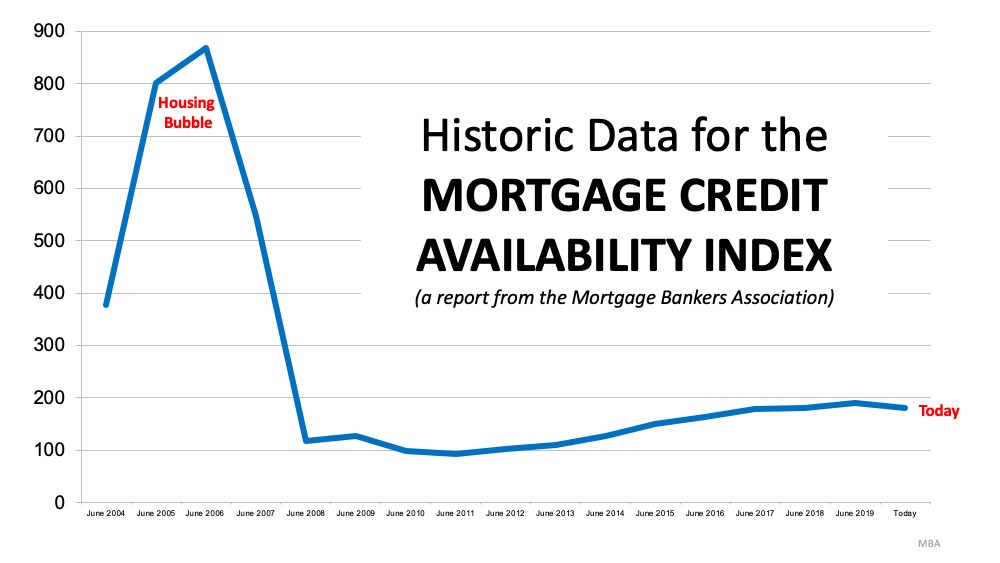
During the housing bubble, it was difficult NOT to get a mortgage. Today, it is tough to qualify. The Mortgage Bankers’ Association releases a Mortgage Credit Availability Index which is “a summary measure which indicates the availability of mortgage credit at a point in time.” The higher the index, the easier it is to get a mortgage. As shown below, during the housing bubble, the index skyrocketed. Currently, the index shows how getting a mortgage is even more difficult than it was before the bubble.5 Simple Graphs Proving This Is NOT Like the Last Time | MyKCM
2. Prices are not soaring out of control.

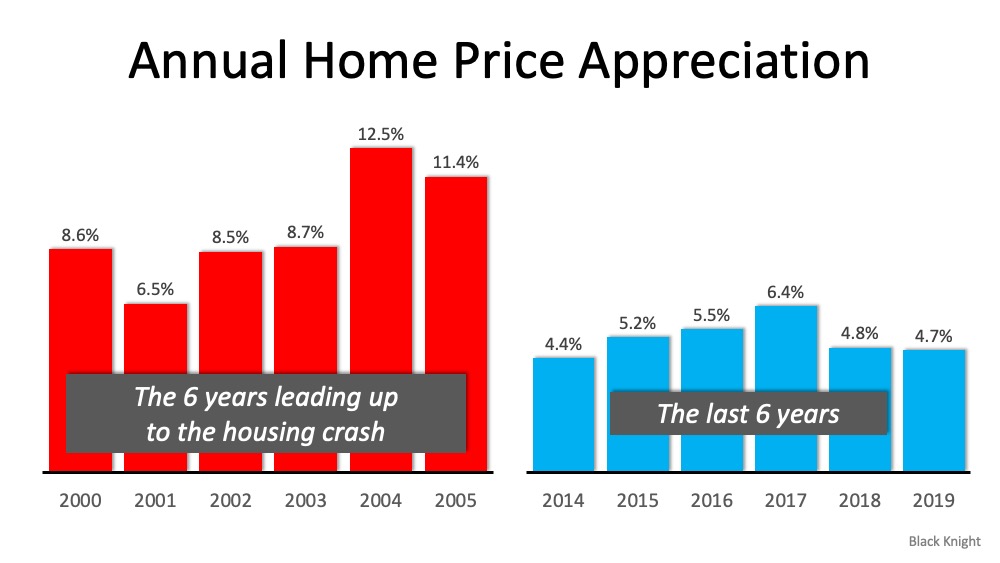
Below is a graph showing annual house appreciation over the past six years, compared to the six years leading up to the height of the housing bubble. Though price appreciation has been quite strong recently, it is nowhere near the rise in prices that preceded the crash.5 Simple Graphs Proving This Is NOT Like the Last Time | MyKCMThere’s a stark difference between these two periods of time. Normal appreciation is 3.6%, so while current appreciation is higher than the historic norm, it’s certainly not accelerating beyond control as it did in the early 2000s.
3. We don’t have a surplus of homes on the market. We have a shortage.

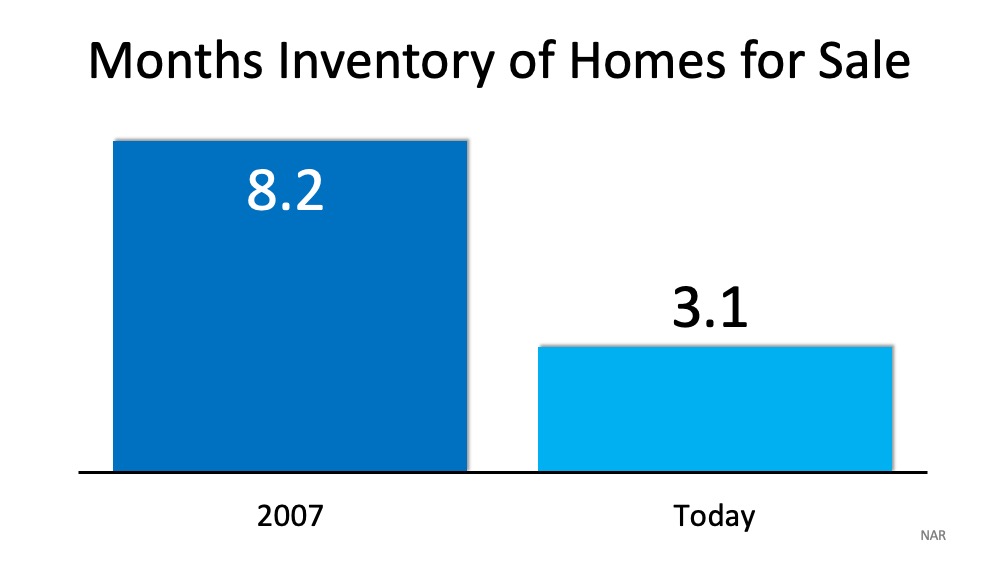
The months’ supply of inventory needed to sustain a normal real estate market is approximately six months. Anything more than that is an overabundance and will causes prices to depreciate. Anything less than that is a shortage and will lead to continued appreciation. As the next graph shows, there were too many homes for sale in 2007, and that caused prices to tumble. Today, there’s a shortage of inventory which is causing an acceleration in home values.5 Simple Graphs Proving This Is NOT Like the Last Time | MyKCM
4. Houses became too expensive to buy.

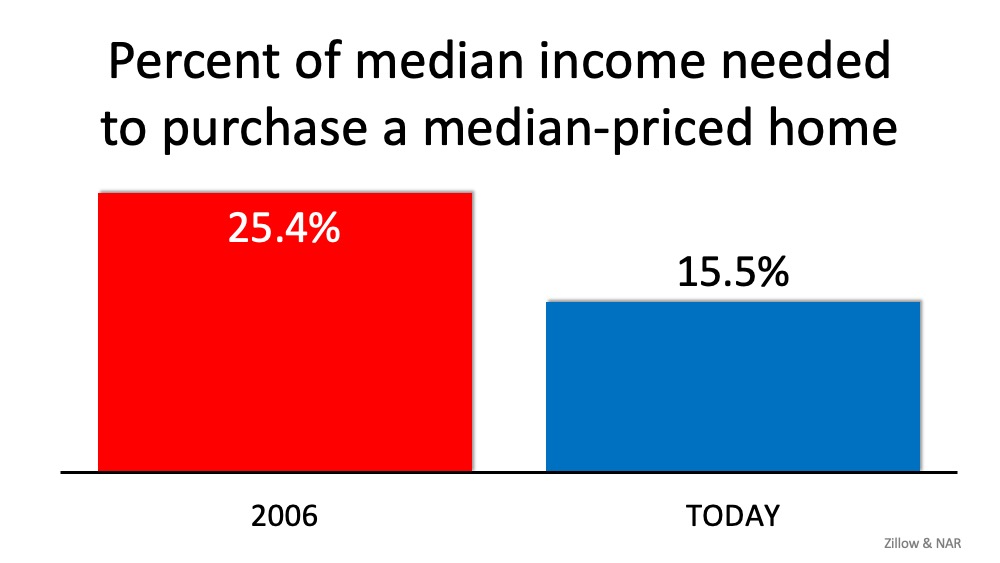
The affordability formula has three components: the price of the home, the wages earned by the purchaser, and the mortgage rate available at the time. Fourteen years ago, prices were high, wages were low, and mortgage rates were over 6%. Today, prices are still high. Wages, however, have increased and the mortgage rate is about 3.5%. That means the average family pays less of their monthly income toward their mortgage payment than they did back then. Here’s a graph showing that difference:5 Simple Graphs Proving This Is NOT Like the Last Time | MyKCM
5. People are equity rich, not tapped out.

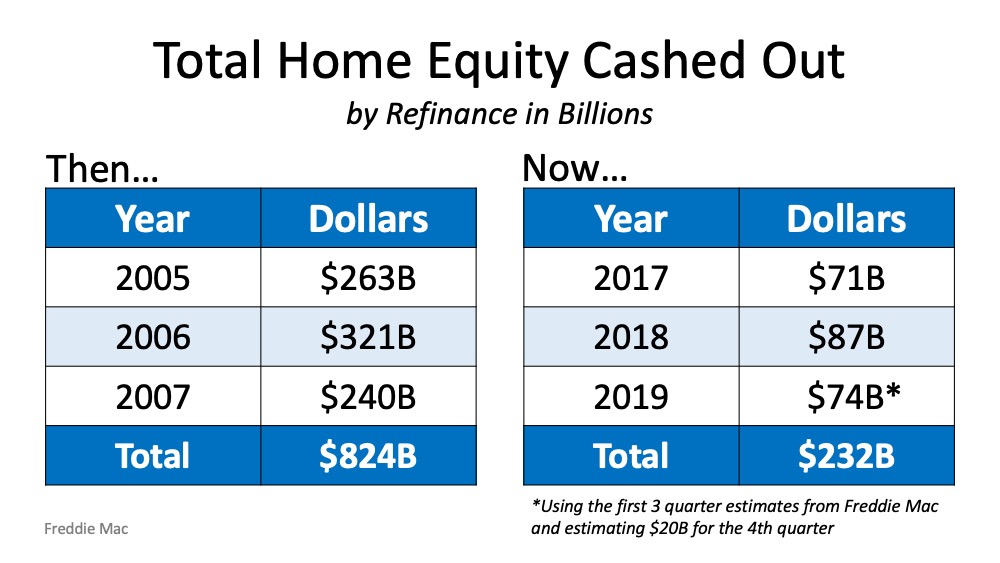
In the run-up to the housing bubble, homeowners were using their homes as a personal ATM machine. Many immediately withdrew their equity once it built up, and they learned their lesson in the process. Prices have risen nicely over the last few years, leading to over fifty percent of homes in the country having greater than 50% equity. But owners have not been tapping into it like the last time. Here is a table comparing the equity withdrawal over the last three years compared to 2005, 2006, and 2007. Homeowners have cashed out over $500 billion dollars less than before:5 Simple Graphs Proving This Is NOT Like the Last Time | MyKCMDuring the crash, home values began to fall, and sellers found themselves in a negative equity situation (where the amount of the mortgage they owned was greater than the value of their home). Some decided to walk away from their homes, and that led to a rash of distressed property listings (foreclosures and short sales), which sold at huge discounts, thus lowering the value of other homes in the area. That can’t happen today.
Bottom Line

If you’re concerned we’re making the same mistakes that led to the housing crash, take a look at the charts and graphs above to help alleviate your fears.


Monday, March 9, 2020

New Homes Coming to the Housing Market This Year

New Homes Coming to the Housing Market This Year | MyKCM
The number of building permits issued for single-family homes is the best indicator of how many newly built homes will begin to come to market over the next few months. According to the latest U.S. Census Bureau and U.S. Department of Housing & Urban Development Residential Construction Report, the number of building permits issued in January was 1,551,000. This is a 9.2% increase from December.

How will this impact buyers?

New inventory means more options. Lawrence Yun, Chief Economist at the National Association of Realtors (NAR), explained how this is good news for the housing market – especially for those looking to buy:
“More construction will mean more housing inventory for consumers in the later months of this year…Spring months could still be quite tough for buyers since it takes time to convert housing starts into actual housing completions.”

How will this impact sellers?

More inventory means more competition. Yun continues to say:
“As trade-up buyers move into these newly completed homes in the near future, their existing homes will be released onto the market.”
Today, because of the tremendous lack of inventory, a seller can potentially anticipate:
  1. great sale price on their house as buyers engage in potential bidding wars.
  2. quick sale as buyers have little inventory to choose from.
  3. Fewer hassles as buyers want to smoothly secure a contract.

Bottom Line

If you’re considering selling your house, you’ll want to list sooner rather than later. This way, you’ll get ahead of this new competition coming to market and ensure the most attention toward your listing and the best price for your house.

Tuesday, March 3, 2020

How Your Tax Refund Can Move You Toward Homeownership This Year

How Your Tax Refund Can Move You Toward Homeownership This Year | MyKCM
If you’re looking to buy a home in 2020, have you thought about putting your tax refund toward a down payment? Homeownership may be one step closer than you think if you spend your dollars wisely this year.
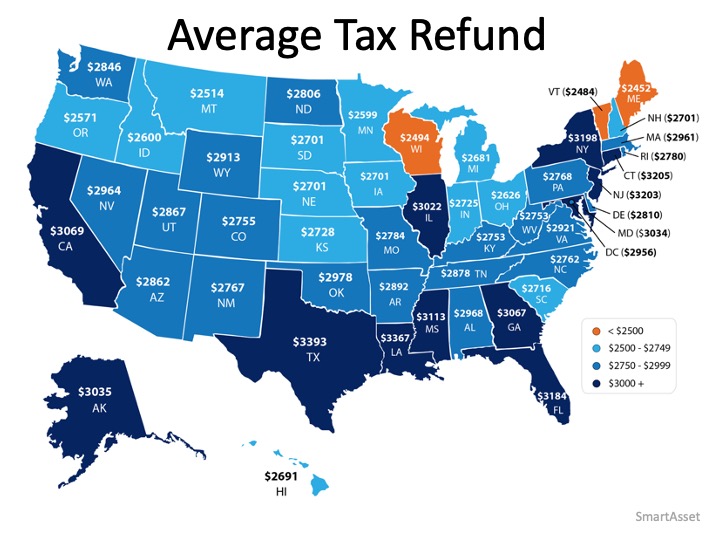
Based on data released by the Internal Revenue Service (IRS), Americans can expect an estimated average refund of $2,962 when filing their taxes this year.
The map below shows the average tax refund Americans received last year by state:How Your Tax Refund Can Move You Toward Homeownership This Year | MyKCMAccording to programs from the Federal Housing Authority, Freddie Mac, and Fannie Mae, many first-time buyers can purchase a home with as little as 3% down. Truth be told, a 20% down payment is not always required to buy a home, even though that’s a common misconception about homebuying. Veterans Affairs Loans allow many veterans to purchase a home with 0% down.

How can my tax refund help?

If you’re a first-time buyer, your tax refund may cover more of a down payment than you ever thought possible.
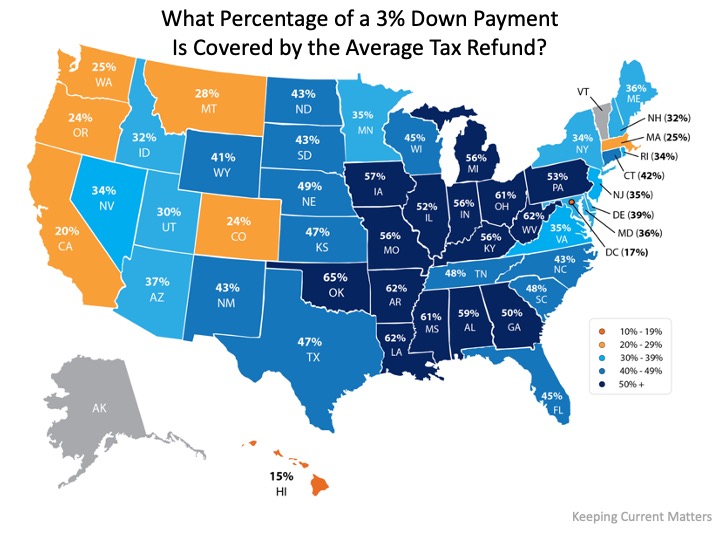
If you take into account the median home sale price by state, the map below shows the percentage of a 3% down payment that’s covered by the average tax refund:How Your Tax Refund Can Move You Toward Homeownership This Year | MyKCMThe darker the blue, the closer your tax refund gets you to homeownership in one of these programs. Maybe this is the year to plan ahead and put your tax refund toward a down payment on a home.

Bottom Line

Saving for a down payment can seem like a daunting task, but the more you know about what’s required, the more prepared you’ll be to make the best decision for you and your family. This tax season, your refund could be your key to homeownership.

Monday, February 24, 2020

Interest Rates Over Time [INFOGRAPHIC]

Interest Rates Over Time [INFOGRAPHIC] | MyKCM

Some Highlights:

  • With interest rates hovering at near historic lows, now is a great time to look back at where they’ve been, and how much they’ve changed over time.
  • According to Freddie Mac, mortgage interest rates are currently hovering near a five-decade low.
  • The impact your interest rate has on your monthly mortgage payment is significant. An increase of just $20 dollars in your monthly payment can add up to $240 per year or $7,200 over the life of your loan. Maybe it’s time to lock in now while rates are still low.

Monday, February 10, 2020

The Top States Americans Moved to Last Year [INFOGRAPHIC]

The Top States Americans Moved to Last Year [INFOGRAPHIC] | MyKCM

Some Highlights:

  • Americans are on the move, and the most recent Atlas Van Lines Migration Patterns Surveytracked the 2019 traffic flow from state-to-state.
  • Idaho held on to the top spot of ‘high inbound’ states for the second time since 2017, followed by Washington State.
  • New York was the country’s outbound move leader in 2019, a designation it most recently held in 2014.

Monday, January 13, 2020

There’s a Long Line of Buyers Waiting for Your House

There’s a Long Line of Buyers Waiting for Your House | MyKCM
If you’re following what’s happening in the housing market right now, you know that many people believe the winter months aren’t a good time to sell a home. As realtor.com Senior Economist George Ratiu recently noted,
“Sellers tend to be more reluctant to list during the colder time of year when the market typically makes a seasonal slowdown.”
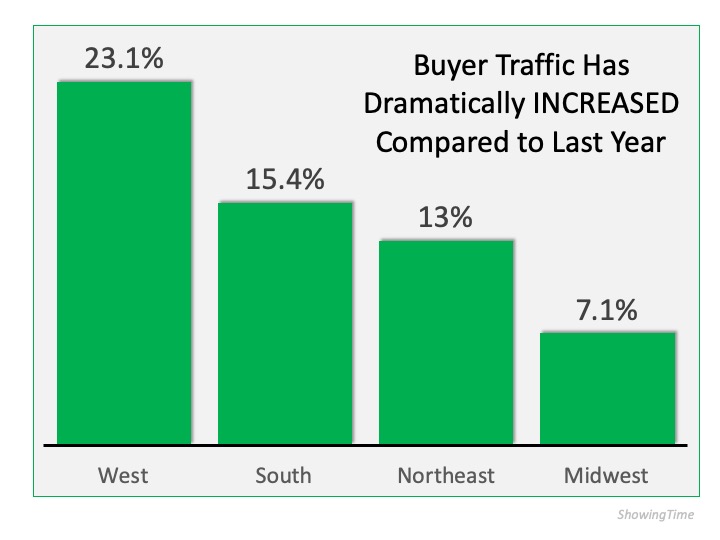
However, a recent report by ShowingTime reveals how this year is different. Buyer activity is way up compared to the same time last year. The report explains,
“The nation’s 12.6% growth in home showings compared to 2018 was the most significant jump in buyer traffic during the current four-month streak of year-over-year increases. The West Region saw the greatest growth in activity, with a 23.1% jump – the region’s greatest in the history of the Showing Index.”
The increase has spread across all four regions of the country, as the graph below shows:There’s a Long Line of Buyers Waiting for Your House | MyKCM

Bottom Line

Waiting for the “spring buyers’ market” may be a mistake this year. It seems the purchasers are already out and looking to buy.

Wednesday, January 8, 2020

The New Spring Real Estate Market is Here. Are You Ready?

The New Spring Real Estate Market is Here. Are You Ready? | MyKCM
Which month do you think most people who are considering buying a home actually start their search? If you’re like most of us, you probably think the surge happens in the spring, likely in April. Not anymore. According to new research, January 2019 was only 1% behind February for the most monthly views per listing on realtor.com.
So, what does that mean? The busiest season in real estate has just begun.
The same research indicates,
“Historically, April launched the kickoff of the home shopping season as buyers would come out of their winter hibernation looking for their new home. However, the spring shopping season now starts in January for many of the nation’s largest markets.”
With the reality of fewer homes on the market in the winter, and that supply naturally increases as we head to the spring market, waiting for more competition to list in your neighborhood this year might put you behind the curve. Perhaps now is the time to jump into the market.
George Ratiu, Senior Economist at realtor.com says,
“As shoppers modify their strategies for navigating a housing market that has become more competitive due to rising prices and low inventory, the search for a home is beginning earlier and earlier.” 
There is a lot of speculation in the market about why the search for a home is shifting to an earlier start. The one thing we do know is if you’re thinking about buying or selling a home this year, the earlier you get started, the better.
Reminder: When should you sell something? When there is less of that item for sale and the greatest number of buyers are in the market. That’s exactly what is happening in real estate right now.

Bottom Line

The new spring market for real estate is underway. If you’re considering buying or selling, let’s connect, so you have the advantage in this competitive market.