Monday, May 18, 2020

#1 Financial Benefit of Homeownership: Family Wealth

#1 Financial Benefit of Homeownership: Family Wealth | MyKCM
While growing up, we were taught by our parents and grandparents that owning a home is a financially savvy move. They explained how a mortgage is like a “forced savings plan.” When you pay rent, that money is lost forever. When you make a mortgage payment, much of that money accumulates as equity in the home. So, what exactly is equity? The equity in your home is the amount of money you can sell it for minus what you still owe on the mortgage. Every month you make a mortgage payment, and every month a portion of what you pay reduces the amount you owe. That reduction of your mortgage every month increases your equity. A recent study by CoreLogic explained that homeowners gained substantial equity over the last twelve months, and are essentially sitting on large sums of cash in their homes. In the study, Frank Nothaft, Chief Economist for CoreLogic explained:
“The CoreLogic Home Price Index recorded a quickening of home price gains during the fourth quarter of 2019, helping to boost home equity wealth. The average family with a mortgage had a $7,300 gain in home equity during the past year, and a total of $177,000 in home equity wealth.”
For most families, their home is their largest financial asset. This increase in equity drives the net worth, or family wealth, of the homeowner. Renters are not earning that benefit. Instead, they’re building the net worth of their landlord.


Bottom Line

Home price growth will moderate during the pandemic. But once a cure is available, most experts agree that home values will again begin to appreciate at levels similar to what we’ve seen over the last several years. In the long run, our family elders will be proven correct: owning a home is a savvy financial move.

Monday, May 11, 2020

Will Home Values Appreciate or Depreciate in 2020?

Will Home Values Appreciate or Depreciate in 2020? | MyKCM
With the housing market staggered to some degree by the health crisis the country is currently facing, some potential purchasers are questioning whether home values will be impacted. The price of any item is determined by supply as well as the market’s demand for that item. Each month the National Association of Realtors (NAR) surveys “over 50,000 real estate practitioners about their expectations for home sales, prices and market conditions” for the REALTORS Confidence Index. Their latest edition sheds some light on the relationship between seller traffic (supply) and buyer traffic (demand) during this pandemic.

Buyer Demand

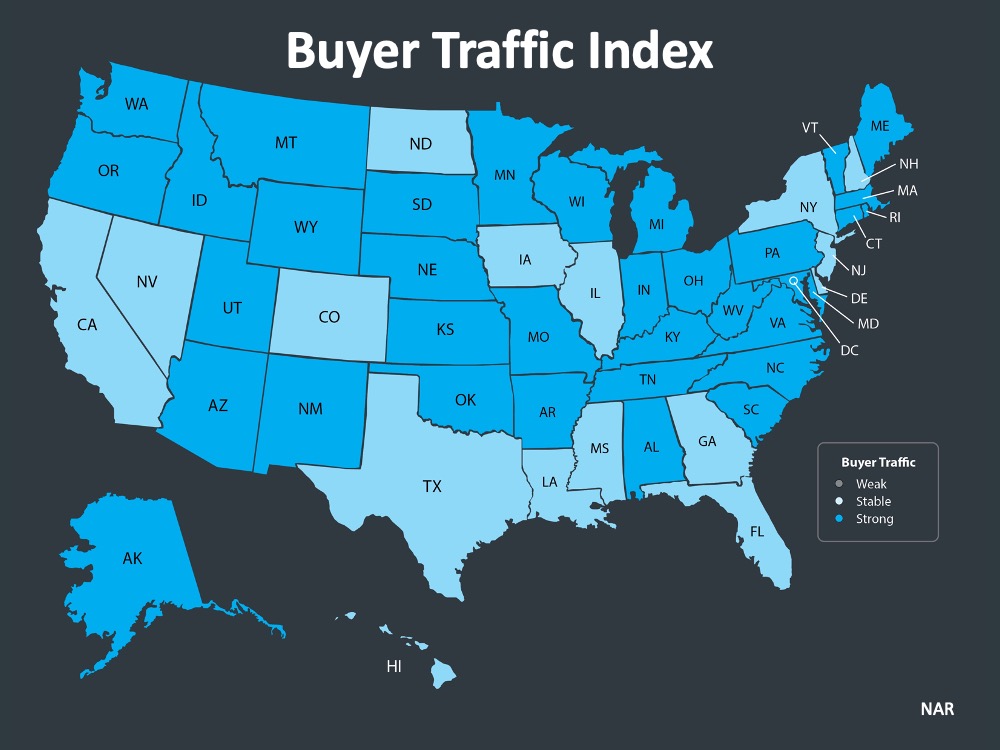
The map below was created after asking the question: “How would you rate buyer traffic in your area?”Will Home Values Appreciate or Depreciate in 2020? | MyKCMThe darker the blue, the stronger the demand for homes is in that area. The survey shows that in 34 of the 50 U.S. states, buyer demand is now ‘strong’ and 16 of the 50 states have a ‘stable’ demand.

Seller Supply 

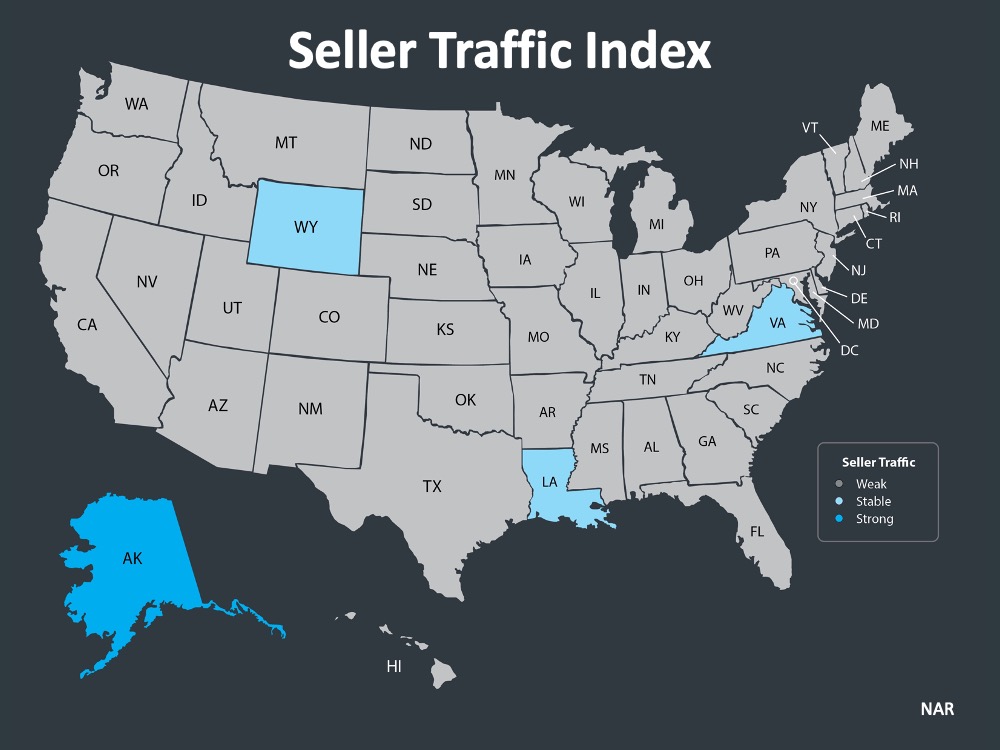
The index also asks: “How would you rate seller traffic in your area?”Will Home Values Appreciate or Depreciate in 2020? | MyKCMAs the map above indicates, 46 states and Washington, D.C. reported ‘weak’ seller traffic, 3 states reported ‘stable’ seller traffic, and 1 state reported ‘strong’ seller traffic. This means there are far fewer homes on the market than what is needed to satisfy the needs of buyers looking for homes right now. With demand still stronger than supply, home values should not depreciate.

What are the experts saying?

Here are the thoughts of three industry experts on the subject: Ivy Zelman:
“We note that inventory as a percent of households sits at the lowest level ever, something we believe will limit the overall degree of home price pressure through the year.”
Mark Fleming, Chief Economist, First American:
“Housing supply remains at historically low levels, so house price growth is likely to slow, but it’s not likely to go negative.”
Freddie Mac:
“Two forces prevent a collapse in house prices. First, as we indicated in our earlier research report, U.S. housing markets face a large supply deficit. Second, population growth and pent up household formations provide a tailwind to housing demand.”

Bottom Line

Looking at these maps and listening to the experts, it seems that prices will remain stable throughout 2020. If you’re thinking about listing your home, let’s connect to discuss how you can capitalize on the somewhat surprising demand in the market now.

Monday, May 4, 2020

How to Test-Drive a Neighborhood While Sheltering in Place [INFOGRAPHIC]

How to Test-Drive a Neighborhood While Sheltering in Place [INFOGRAPHIC]

How to Test-Drive a Neighborhood While Sheltering in Place [INFOGRAPHIC] | MyKCM

Some Highlights

  • Staying at home doesn’t mean your search for a new place needs to come to a standstill.
  • Check out these tips on how to explore other neighborhoods virtually in the homebuying process. You may find a spot that better suits your needs without ever leaving your living room!
  • Let’s connect today so you have help with all of the additional steps along the way, and you’re ready to make your next move.

Monday, April 27, 2020

What Impact Might COVID-19 Have on Home Values?

What Impact Might COVID-19 Have on Home Values? | MyKCM
A big challenge facing the housing industry is determining what impact the current pandemic may have on home values. Some buyers are hoping for major price reductions because the health crisis is straining the economy.
The price of any item, however, is determined by supply and demand, which is how many items are available in relation to how many consumers want to buy that item.
In residential real estate, the measurement used to decipher that ratio is called months supply of inventory. A normal market would have 6-7 months of inventory. Anything over seven months would be considered a buyers’ market, with downward pressure on prices. Anything under six months would indicate a sellers’ market, which would put upward pressure on prices.
Going into March of this year, the supply stood at three months – a strong seller’s market. While buyer demand has decreased rather dramatically during the pandemic, the number of homes on the market has also decreased. The recently released Existing Home Sales Reportfrom the National Association of Realtors (NAR) revealed we currently have 3.4 months of inventory. This means homes should maintain their value during the pandemic.
This information is consistent with the research completed by John Burns Real Estate Consulting, which recently reported:
“Historical analysis showed us that pandemics are usually V-shaped (sharp recessions that recover quickly enough to provide little damage to home prices).”

What are the experts saying?

Here’s a look at what some experts recently reported on the matter:
“Supported by our analysis of home price dynamics through cycles and other periods of economic and housing disruption, we expect home price appreciation to decelerate from current levels in 2020, though easily remain in positive territory year over year given the beneficial factors of record-low inventories & a historically-low interest rate environment.”
“The fiscal stimulus provided by the CARES Act will mute the impact that the economic shock has on house prices. Additionally, forbearance and foreclosure mitigation programs will limit the fire sale contagion effect on house prices. We forecast house prices to fall 0.5 percentage points over the next four quarters. Two forces prevent a collapse in house prices. First, as we indicated in our earlier research report, U.S. housing markets face a large supply deficit. Second, population growth and pent up household formations provide a tailwind to housing demand. Price growth accelerates back towards a long-run trend of between 2 and 3% per year.”
“The housing supply remains at historically low levels, so house price growth is likely to slow, but it’s unlikely to go negative.” 

Bottom Line

Even though the economy has been placed on pause, it appears home prices will remain steady throughout the pandemic.

Monday, April 20, 2020

The Pain of Unemployment: It Will Be Deep, But Not for Long

The Pain of Unemployment: It Will Be Deep, But Not for Long | MyKCM
There are two crises in this country right now: a health crisis that has forced everyone into their homes and a financial crisis caused by our inability to move around as we normally would. Over 20 million people in the U.S. became instantly unemployed when it was determined that the only way to defeat this horrific virus was to shut down businesses across the nation. One second a person was gainfully employed, a switch was turned, and then the room went dark on their livelihood.
The financial pain so many families are facing right now is deep.

How deep will the pain cut?

Major institutions are forecasting unemployment rates last seen during the Great Depression. Here are a few projections:
  • Goldman Sachs – 15%
  • Merrill Lynch – 10.6%
  • JP Morgan – 8.5%
  • Wells Fargo – 7.3%

How long will the pain last?

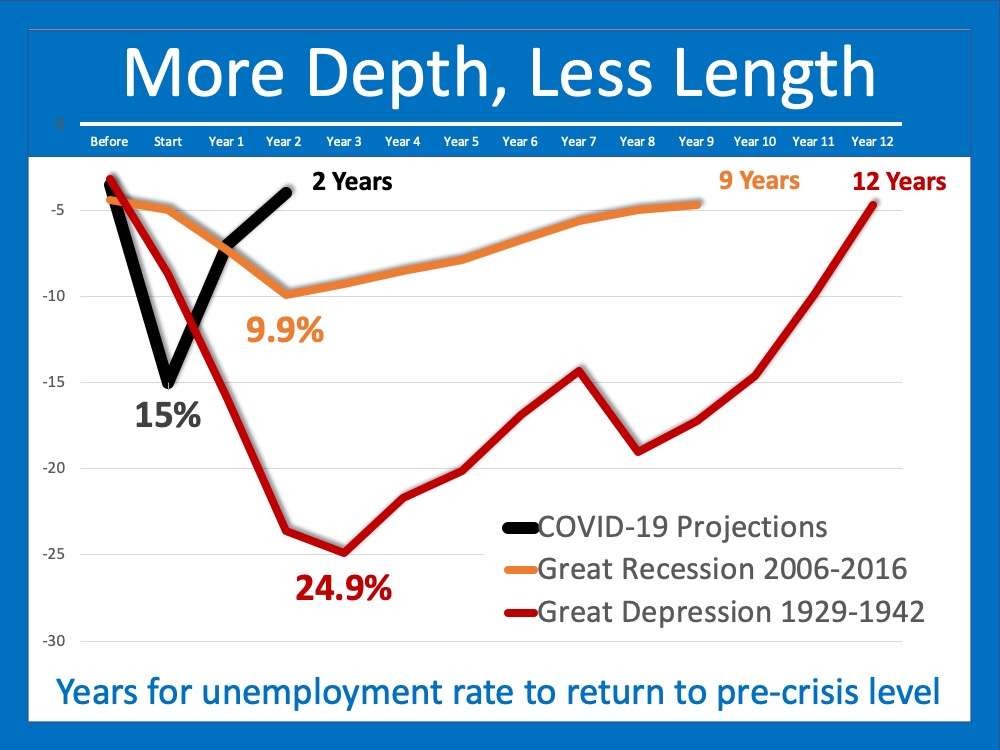
As horrific as those numbers are, there is some good news. The pain will be deep, but it won’t last as long as it did after previous crises. Taking the direst projection from Goldman Sachs, we can see that 15% unemployment quickly drops to 6-8% as we head into next year, continues to drop, and then returns to about 4% in 2023.
When we compare that to the length of time it took to get back to work during both the Great Recession (9 years long) and the Great Depression (12 years long), we can see how the current timetable is much more favorable.The Pain of Unemployment: It Will Be Deep, But Not for Long | MyKCM

Bottom Line

It’s devastating to think about how the financial heartache families are going through right now is adding to the uncertainty surrounding their health as well. Hopefully, we will soon have the virus contained and then we will, slowly and safely, return to work.

Monday, April 13, 2020

What You Can Do to Get Your House Ready to Sell [INFOGRAPHIC]

What You Can Do to Get Your House Ready to Sell | MyKCM

Some Highlights:

  • Believe it or not, there are lots of things you can do to prep your house for a sale without even going to the store.
  • Your real estate plans don’t have to be completely on hold even while we’ve hit the pause button on other parts of daily life.
  • Tackling small projects from cleaning the corners you may normally skip to tidying up your yard are easy and necessary wins if you’re thinking of listing your house and making a move.

Monday, April 6, 2020

The Housing Market Is Positioned to Help the Economy Recover [INFOGRAPHIC]

The Housing Market Is Positioned to Help the Economy Recover [INFOGRAPHIC] | MyKCM

Some Highlights

  • Expert insights are painting a bright future for housing when the economy bounces back – and it will.
  • We may be facing challenging economic times today, but the housing market is poised to help the economy recover, not drag it down.
  • Let’s connect to make sure you’re informed and ready when it’s time to make your move.