San Diego Skyline

San Diego Skyline

Monday, December 28, 2015

Why Did Home Sales Drop So Dramatically Last Month?

Why Did Home Sales Drop So Dramatically Last Month? | Keeping Current Matters
Yesterday, the National Association of Realtors (NAR) released their latest Existing Home Sales Report which covered sales in November. The report revealed that sales:
“…fell 10.5 percent to a seasonally adjusted annual rate of 4.76 million in November (lowest since April 2014 at 4.75 million)…”
That revelation gave birth to a series of industry articles, some of which quoted pundits questioning whether the housing market was slowing. In actuality, there is one rather simple explanation to much of the falloff in sales last month. It is likely the implementation of the “Know Before You Owe” mortgage rule, commonly known as the TILA-RESPA Integrated Disclosure (TRID) rule, which went into effect on October 3. These regulations caused house closings to be delayed by an extra three days in November as shown in the graph below.
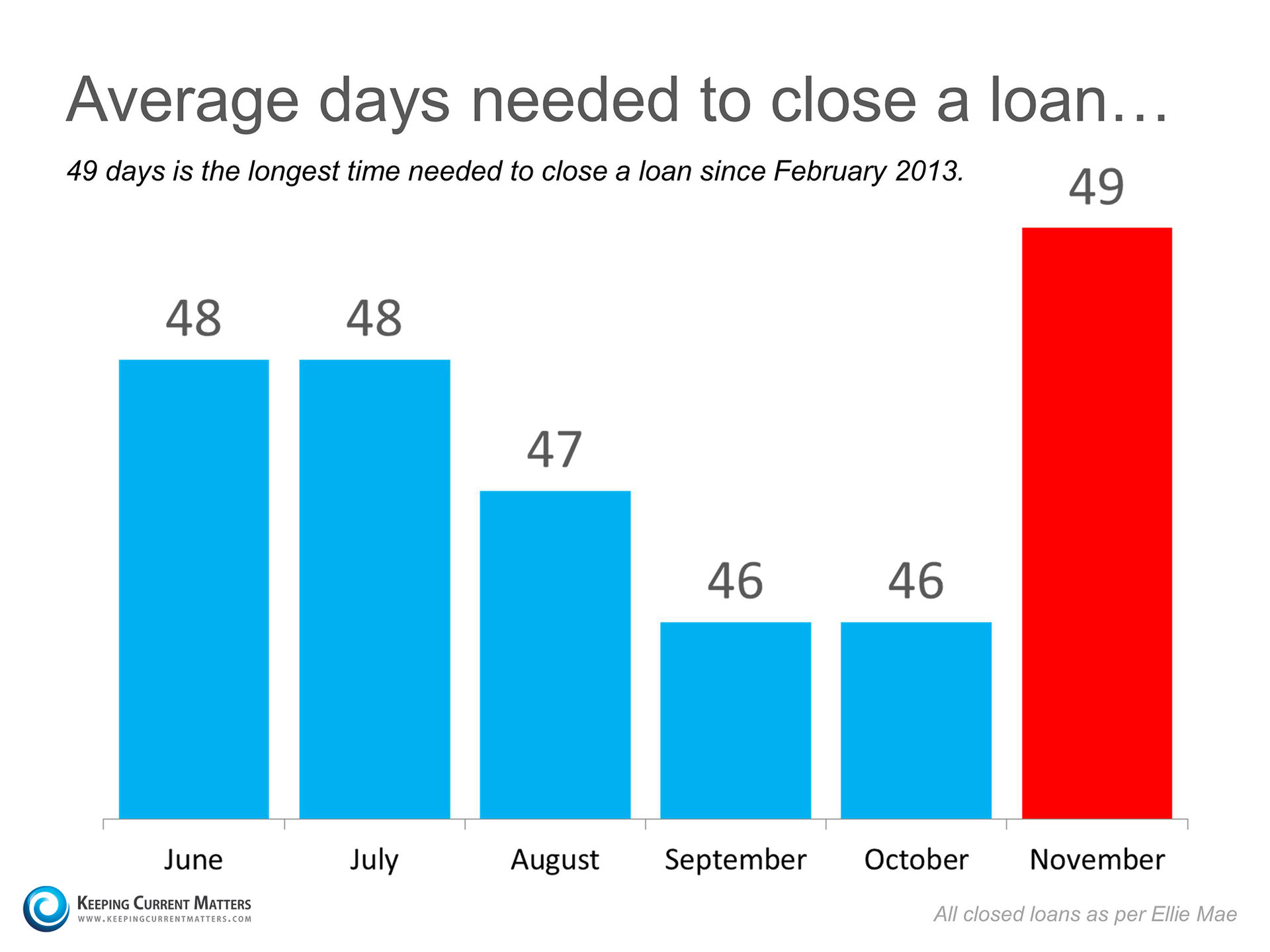
Average Days To Close | Keeping Current Matters
Three days might sound like a minimal difference. However, since there are only approximately 20 days in a month that a closing would normally take place (Mondays through Fridays), losing three days constitutes well over 10% of all closings. These sales are not lost. They are just moved into the next month’s numbers. In a DS News article on the subject yesterday, Auction.com EVP Rick Sharga explained:
“The most likely cause for the weak sales numbers is a delay in processing loans due to the new TRID mortgage requirements imposed by the CFPB. This is the biggest change in mortgage document processing in many years, and there have been numerous reports within the industry of problems implementing the process and the new documentation that comes with it.”

So how is the housing market actually doing?

A better way to look at how well the housing market is doing is to look at the Foot Traffic Report from NAR which quantifies the number of prospective buyers that are actively looking for a home at the current time:
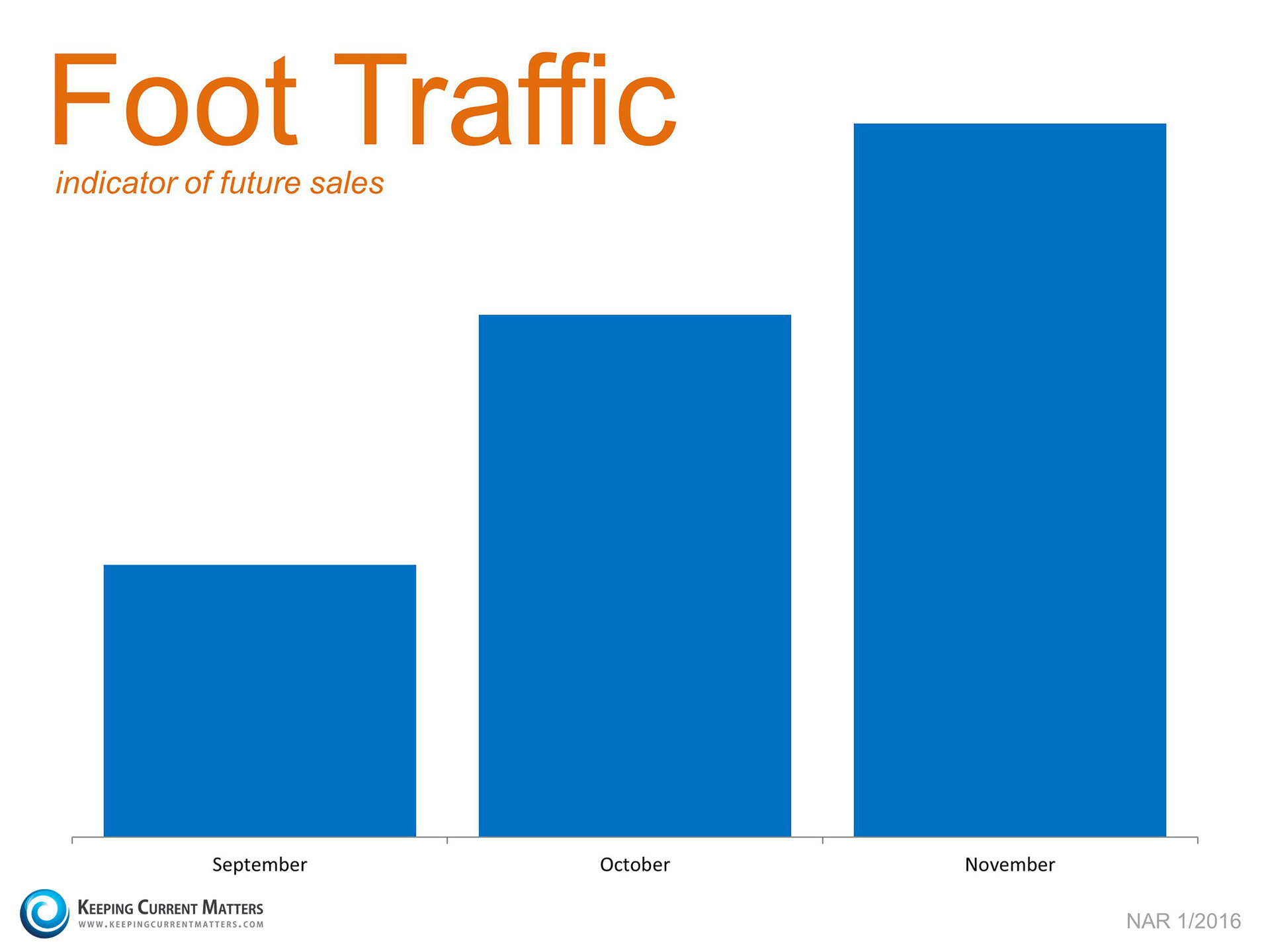
Foot Traffic Growing | Keeping Current Matters
We can see immediately that demand to buy single family homes is increasing over the last few months - not decreasing.

Bottom Line

No matter what last month’s sales numbers show, the housing market is still doing well as demand remains strong.

Monday, December 14, 2015

You Will Need to Sell Your Home Twice

You Will Need to Sell Your Home Twice | Keeping Current Matters
A recent post on “The Home Story”, a site published by Fannie Mae, explained the difference between the price a seller may get for their home and the value an appraiser might assign the property.

The Sales Price

Of course, most sellers want to maximize the value they get for the house. However, the price they set might not be reflective of the other comparable homes in the neighborhood. As the article stated:
“People tend to view their homes emotionally, and that can become quickly apparent when they decide to sell.”
That doesn’t mean that the home won’t necessarily sell for that price.
A seller can set an asking price and actually have a buyer agree to that price. However, that value may not be necessarily in agreement with what most buyers are willing to pay. For example, one person can view a property, determine it is exactly what they are looking for and well worth the asking price, whereas another person could look at the same property and feel the asking price is too high.
Steven Corbin, Director of Valuation in Fannie Mae’s CPM Real Estate division gives an example:
“Someone may have driven by the property countless times, and they really want to live in that house. So in reality they may overbid for that property. This would be a situation where the actions of a specific buyer do not represent the actions of a typical buyer.”

The Appraised Value (or Market Value)

Fannie Mae explains what they look for when appraising the house:
“When a contract is established on a property, an appraised value is determined by a professional real estate appraiser. The appraiser works on the lender’s behalf to determine that value by taking many factors into consideration, including the neighborhood, the value of properties of similar size and construction, and even such things as the type of fixtures on the premises and layout of the floor plan.”
Corbin adds:
“From a lending perspective, a bank would want to know the probable price a typical buyer would offer for the property. That’s what an appraiser would set as the market value.”

The Challenge when Sales Price and Appraisal Value are Different 

If the appraiser comes in with a value that is below the agreed upon sales price, the lending institution might not authorize the mortgage for the full amount a buyer would need to complete the transaction.
Quicken Loans actually releases a Home Price Perception Index (HPPI) that quantifies the difference between what sellers and appraisers believe regarding value. The HPPIrepresents the difference between appraisers’ and homeowners’ opinions of home values.
Currently, there is approximately a 2% difference between what homeowners believe their home to be worth and what appraisers value that same home. On a $300,000 sale that would be a $6,000 difference. That could be a challenge that might prevent the home sale proceeding to the closing table.
Quicken Loans Chief Economist Bob Walters recently commented on this issue:
“The more homeowners are in line with appraisers, the easier it will be to refinance their mortgage and easier for those looking to buy a home. If the two are aligned, it eliminates one of the top stumbling blocks in the mortgage process.”

Bottom Line

Every house on the market has to be sold twice; once to a prospective buyer and then to the bank (through the bank’s appraisal). In a housing market where supply is very low and demand is very high, home values increase rapidly. One major challenge in such a market is the bank appraisal. If prices are jumping, it is difficult for appraisers to find adequate comparable sales (similar houses in the neighborhood that closed recently) to defend the price when performing the appraisal for the bank.
With escalating prices, the second sale might be even more difficult than the first.That is why we suggest that you use an experienced real estate professional to help set your listing price.

Monday, December 7, 2015

NAR Reports Reveal Two Reasons to Sell This Winter

NAR Reports Reveal Two Reasons to Sell This Winter | Keeping Current Matters
We all realize that the best time to sell anything is when demand is high and the supply of that item is limited. The last two major reports issued by the National Association of Realtors (NAR) revealed information that suggests that now is a great time to sell your house.
Let’s look at the data covered by the latest Pending Home Sales Report and Existing Home Sales Report.

THE PENDING HOME SALES REPORT

The report announced that pending home sales (homes going into contract) are up 3.9% over last year, and have increased year-over-year now for 14 consecutive months.
Lawrence Yun, NAR’s Chief Economist, expects demand to remain stable through the final two months of the year, and “forecasts existing-home sales to finish 2015 at a pace of 5.30 million – the highest since 2006.” 
Takeaway: Demand for housing will continue throughout the end of 2015 and into 2016. The seasonal slowdown often felt in the winter months hasn’t started and shows little signs of being near.

THE EXISTING HOME SALES REPORT

The most important data point revealed in the report was not sales but instead the inventory of homes on the market (supply). The report explained:
  • Total housing inventory decreased 2.3% to 2.14 million homes available for sale
  • That represents a 4.8-month supply at the current sales pace
  • Unsold inventory is 4.5% lower than a year ago
There were two more interesting comments made by Yun in the report:
1. "New and existing-home supply has struggled to improve, leading to few choices for buyers and no easement of the ongoing affordability concerns still prevalent in some markets."
In real estate, there is a guideline that often applies. When there is less than 6 months inventory available, we are in a sellers’ market and we will see appreciation. Between 6-7 months is a neutral market where prices will increase at the rate of inflation. More than 7 months inventory means we are in a buyers’ market and should expect depreciation in home values. As Yun notes, we are currently in a sellers’ market (prices still increasing).
2. "Unless sizeable supply gains occur for new and existing homes, prices and rents will continue to exceed wages into next year and hamstring a large pool of potential buyers trying to buy a home.” As rents and prices increase, potential buyers will not able to save as much for a down payment and many may become priced out of the market.
Takeaway: Inventory of homes for sale is still well below the 6 months needed for a normal market. Prices will continue to rise if a ‘sizeable’ supply does not enter the market. Take advantage of the ready willing and able buyers that are still out looking for your house.

Bottom Line

If you are going to sell, now may be the time.

Monday, November 30, 2015

Existing Home Sales Up 3.9% [INFOGRAPHIC]

Existing Home Sales Up 3.9% [INFOGRAPHIC] | Keeping Current Matters

Some Highlights:

  • The annual adjusted sales are currently at a 5.36 million pace.
  • 14,684 homes sell every day in the United States.
  • October marked the 44th consecutive month of price gains.

Monday, November 23, 2015

Should I Pay a Mortgage Interest Rate over 4%?

Should I Pay a Mortgage Interest Rate over 4%? | Keeping Current Matters
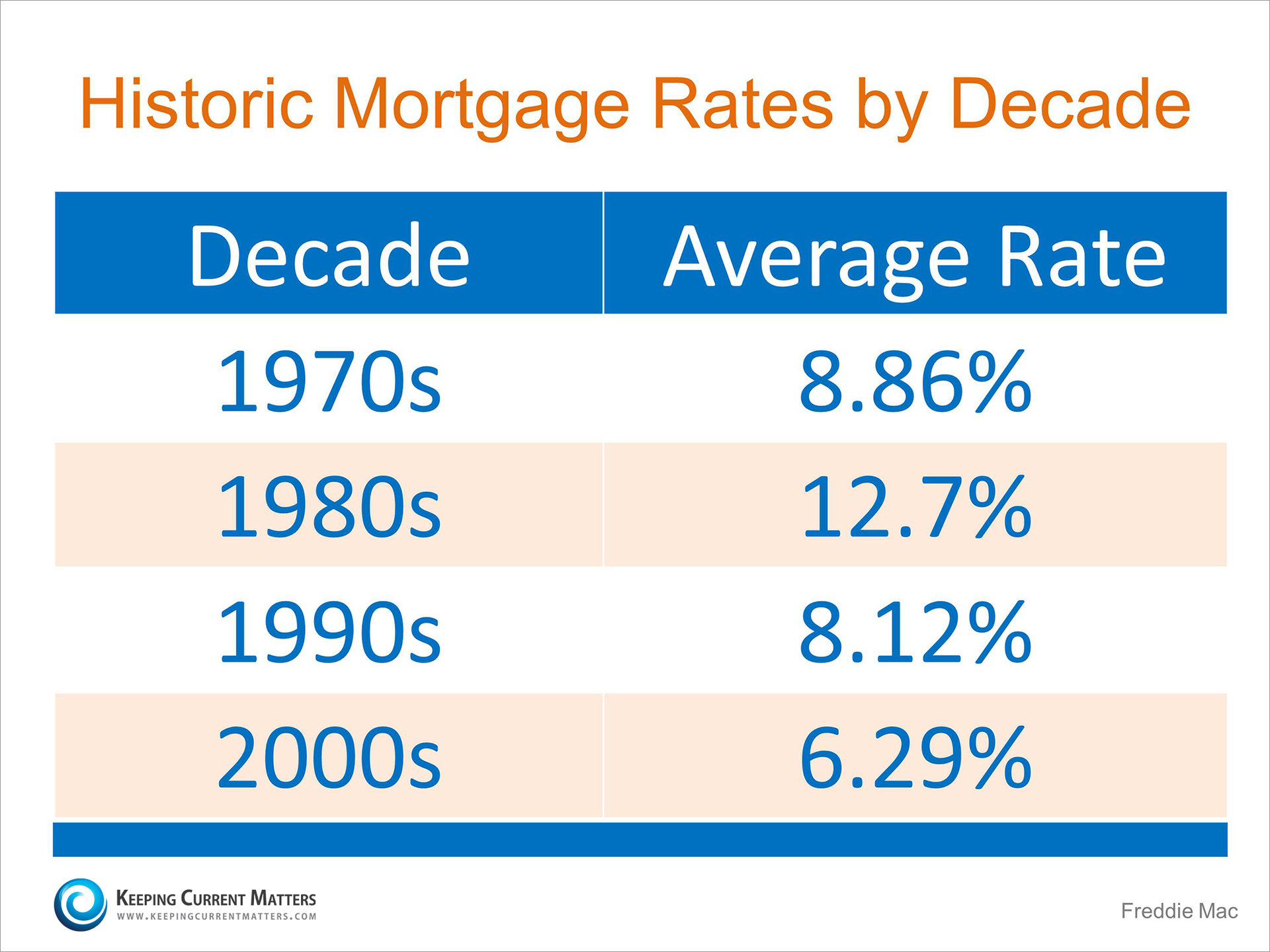
Mortgage interest rates, as reported by Freddie Mac, have increased over the last several weeks. Along with Freddie Mac, Fannie Mae, the Mortgage Bankers Association and the National Association of Realtors are all calling for mortgage rates to continue to rise over the next four quarters.
This has caused some purchasers to lament the fact they may no longer be able to get a rate less than 4%. However, we must realize that current rates are still at historic lows.
Here is a chart showing the average mortgage interest rate over the last several decades.
Historic Mortgage Rates By Decade | Keeping Current Matters

Bottom Line

Though you may have missed getting the lowest mortgage rate ever offered, you can still get a better interest rate than your older brother or sister did ten years ago; a lower rate than your parents did twenty years ago and a better rate than your grandparents did forty years ago.

Monday, November 16, 2015

Why You Should Sell Now… Before Winter Hits

Why You Should Sell Now... Before Winter Hits | Keeping Current Matters
People across the country are beginning to think about what their life will look like next year. It happens every Fall. We ponder whether we should relocate to a different part of the country to find better year-round weather or perhaps move across the state for better job opportunities.
Homeowners in this situation must consider whether they should sell their house now or wait. If you are one of these potential sellers, here are five important reasons to do it now versus the dead of winter.

1. Demand is Strong

Foot traffic refers to the number of people out actually physically looking at home right now. The latest foot traffic numbers show that buyers are still out in force looking for their dream home. These buyers are ready, willing and able to buy…and are in the market right now!
As we get later into the year, many people have other things (weather, holidays, etc.) that distract them from searching for a home. Take advantage of the buyer activity currently in the market.

2. There Is Less Competition Now

Housing supply is still well under the 6 months’ supply necessary for a normal market. This means that, in many markets, there are not enough homes for sale to satisfy the number of buyers in that market. This is good news for home prices. However, additional inventory is about to come to market.
There is a pent-up desire for many homeowners to move as they were unable to sell over the last few years because of a negative equity situation. Homeowners are now seeing a return to positive equity as real estate values have increased over the last two years. Many of these homes will be coming to the market in the near future.
Also, new construction of single-family homes is again beginning to increase. A study by Harris Poll revealed that 41% of buyers would prefer to buy a new home while only 21% prefer an existing home (38% had no preference).
The choices buyers have will continue to increase over the next few months. Don’t wait until all this other inventory of homes comes to market before you sell.

3. The Process Will Be Quicker

One of the biggest challenges of the housing market in recent times has been the length of time it takes from contract to closing. Banks are requiring more and more paperwork before approving a mortgage. Any delay in the process is always prolonged during the winter holiday season. Getting your house sold and closed before those delays begin will lend itself to a smoother transaction.

4. There Will Never Be a Better Time to Move-Up

If you are moving up to a larger, more expensive home, consider doing it now. Prices are projected to appreciate by over 18.1% from now to 2019. If you are moving to a higher priced home, it will wind-up costing you more in raw dollars (both in down payment and mortgage payment) if you wait. You can also lock-in your 30-year housing expense with an interest rate below 4% right now. Rates are projected to rise by this time next year.

5. It’s Time to Move On with Your Life

Look at the reason you decided to sell in the first place and determine whether it is worth waiting. Is money more important than being with family? Is money more important than your health? Is money more important than having the freedom to go on with your life the way you think you should?
Only you know the answers to the questions above. You have the power to take back control of the situation by putting your home on the market. Perhaps, the time has come for you and your family to move on and start living the life you desire.

That is what is truly important.