Monday, December 19, 2016

Why You Shouldn’t Take Your House Off the Market During the Holidays

If you are one of the many homeowners who is debating taking your home off the market for the next few weeks, don’t! You will miss the great opportunity you have right now!
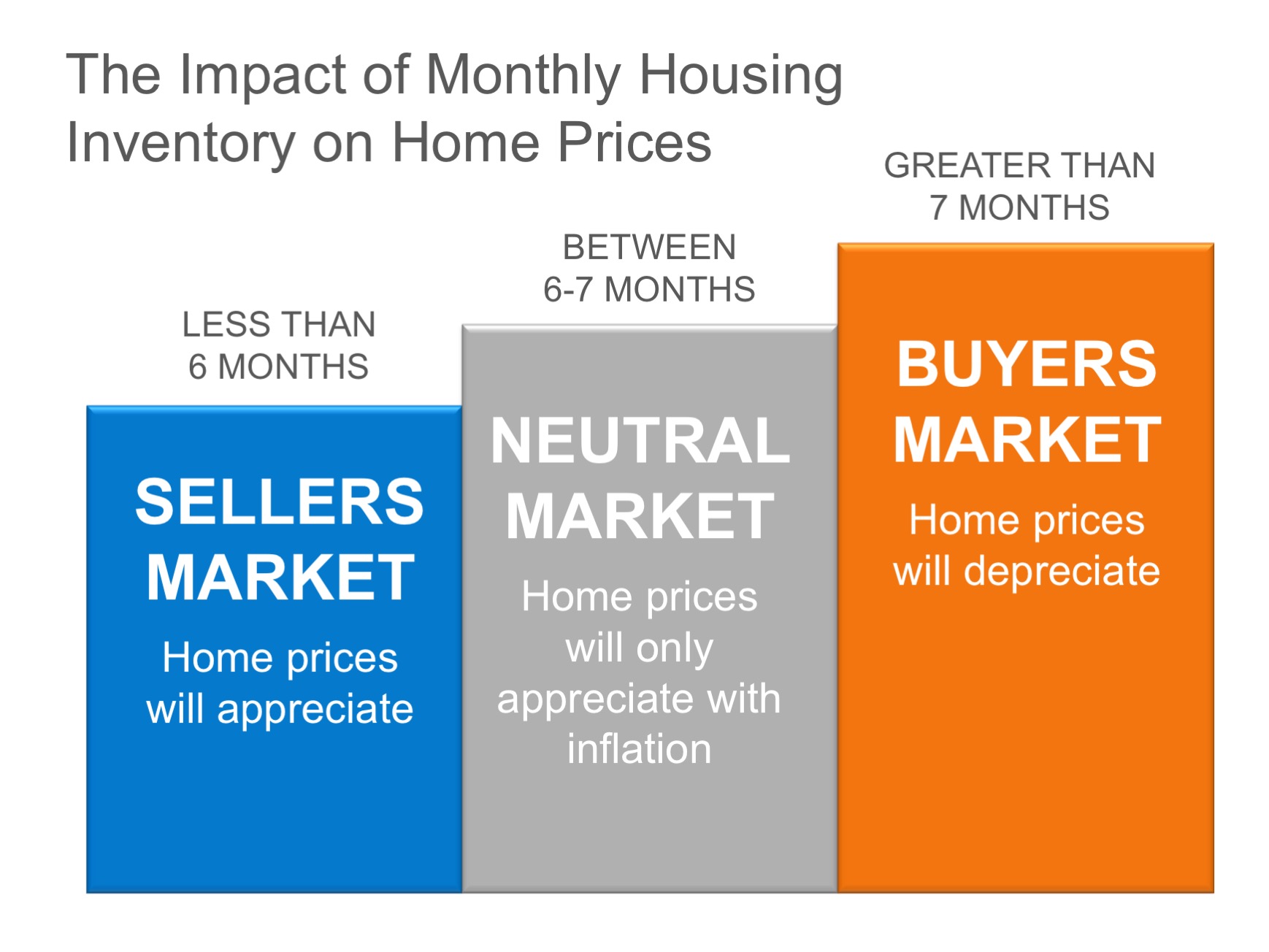
The latest Existing Home Sales Report from The National Association of Realtors (NAR), revealed that the inventory of homes for sale has dropped to a 4.3-month supply.
Historically, a 6-month supply is necessary for a ‘normal’ market, explained below:
Why You Shouldn’t Take Your House Off the Market During the Holidays | MyKCM
There are more buyers that are ready, willing, and able to buy now than there have been in years! The supply of homes for sale is not keeping up with the demand of these buyers.

Bottom Line

Home prices are appreciating in this seller’s market. Making your home available over the next few weeks will give you the most exposure to buyers who will be competing against each other to buy it.

Monday, December 12, 2016

Selling in the Winter Attracts Serious Buyers

Selling in the Winter Attracts Serious Buyers | MyKCM
A recent study of more than 7 million home sales over the past four years revealed that the season in which a home is listed may be able to shed some light on the likelihood that the home will sell for more than asking price, as well as how quickly the sale will close.
It’s no surprise that listing a home for sale during the spring saw the largest return, as the spring is traditionally the busiest month for real estate. What is surprising, though, is that listing during the winter came in second!
“Among spring listings, 18.7 percent of homes fetched above asking, with winter listings not far behind at 17.5 percent. While 48.0 percent of homes listed in spring sold within 30 days, 46.2 percent of homes in winter did the same.”
The study goes on to say that:
“Buyers [in the winter] often need to move, so they’re much less likely to make a lowball offer and they’ll often want to close quickly — two things that can make the sale much smoother.”  

Bottom Line

If you are debating listing your home for sale within the next 6 months, keep in mind that the spring is when most other homeowners will decide to list their homes as well. Listing your home this winter will ensure that you have the best exposure to the serious buyers who are out looking now!
The study used the astronomical seasons to determine which season the listing date fell into (Winter: Dec. 21 – Mar. 20; Spring: Mar. 21 – June 20; Summer: June 21 – Sept 21; Autumn: Sept 21 – Dec. 20).

Monday, December 5, 2016

4 Reasons to Buy Your Dream Home This Winter

4 Reasons to Buy Your Dream Home This Winter | MyKCM
As the temperature in many areas of the country starts to cool down, you might think that the housing market will do the same. This couldn’t be further from the truth! Here are 4 reasons you should consider buying your dream home this winter instead of waiting for spring!

1. Prices Will Continue to Rise

CoreLogic’s latest Home Price Index reports that home prices have appreciated by 6.3% over the last 12 months. The same report predicts that prices will continue to increase at a rate of 5.2% over the next year.
The bottom in home prices has come and gone. Home values will continue to appreciate for years. Waiting no longer makes sense.

2. Mortgage Interest Rates are Projected to Increase

Your monthly housing cost is as much related to the price you pay for your home as it is to the mortgage interest rate you secure.
Freddie Mac’s Primary Mortgage Market Survey shows that interest rates for a 30-year mortgage are currently at 4.08%. The Mortgage Bankers Association, Fannie Mae, Freddie Mac & theNational Association of Realtors are in unison, projecting that rates will increase by this time next year.
An increase in rates will impact YOUR monthly mortgage payment. A year from now, your housing expense will increase if a mortgage is necessary to buy your next home.

3. Either Way You’re Paying a Mortgage

There are some renters who have not yet purchased a home because they are uncomfortable taking on the obligation of a mortgage. Everyone should realize that, unless you are living with your parents rent free, you are paying a mortgage - either yours or your landlord’s.
As an owner, your mortgage payment is a form of ‘forced savings’ that allows you to have equity in your home that you can tap into later in life. As a renter, you guarantee your landlord is the person with that equity.
Are you ready to put your housing cost to work for you?

4. It’s Time to Move on with Your Life

The ‘cost’ of a home is determined by two major components: the price of the home and the current mortgage rate. It appears that both are on the rise.
But what if they weren’t? Would you wait?
Look at the actual reason you are buying and decide whether it is worth waiting. Whether you want to have a great place for your children to grow up, you want your family to be safer or you just want to have control over renovations, maybe now is the time to buy.

If the right thing for you and your family is to purchase a home this year, buying sooner rather than later could lead to substantial savings.

Monday, November 28, 2016

Existing Home Sales Surge Forward Through Fall [INFOGRAPHIC]

Existing Home Sales Surge Forward Through Fall [INFOGRAPHIC] | MyKCM

Some Highlights:

  • The National Association of Realtors (NAR) recently released their latest Existing Home Sales Report.
  • First-time homebuyers made up 33% of all sales in October.
  • Homes are selling quickly with 43% of homes on the market for less than a month.
  • A limited supply continues to drive up prices for the 56th consecutive month.

Monday, November 21, 2016

From Empty Nest to Full House… Multigenerational Families Are Back!

From Empty Nest to Full House… Multigenerational Families Are Back! | MyKCM
Multigenerational homes are coming back in a big way! In the 1950s, about 21%, or 32.2 million Americans shared a roof with their grown children or parents. According to a recent Pew Research Center report, the number of multigenerational homes dropped to as low as 12% in 1980 but has shot back up to 19%, roughly 60.6 million people, as recently as 2014.
Multigenerational households typically occur when adult children (over the age of 25) either choose to, or need to, remain living in their parent’s home, and then have children of their own. These households also occur when grandparents join their adult children and grandchildren in their home.
According to the National Association of Realtors’ (NAR) 2016 Profile of Home Buyers and Sellers, 11% of home buyers purchased multigenerational homes last year. The top 3 reasons for purchasing this type of home were:
  • To take care of aging parents (19%)
  • Cost savings (18%, up from 15% last year)
  • Children over the age of 18 moving back home (14%, up from 11% last year)
Donna Butts, Executive Director of Generations United, points out that,
“As the face of America is changing, so are family structures. It shouldn’t be a taboo or looked down upon if grown children are living with their families or older adults are living with their grown children.”
For a long time, nuclear families (a couple and their dependent children) became the accepted norm, but John Graham, co-author of “Together Again: A Creative Guide to Successful Multigenerational Living,” says, “We’re getting back to the way human beings have always lived in – extended families.”
This shift can be attributed to several social changes over the decades. Growing racial and ethnic diversity in the U.S. population helps explain some of the rise in multigenerational living. The Asian and Hispanic populations are more likely to live in multigenerational family households and these two groups are growing rapidly.
Additionally, women are a bit more likely to live in multigenerational conditions than are their male counterparts (20% vs. 18%, respectively). Last but not least, basic economics.
Carmen Multhauf, co-author of the book “Generational Housing: Myth or Mastery for Real Estate,” brings to light the fact that rents and home prices have been skyrocketing in recent years. She says that, “The younger generations have not been able to save,” and often struggle to get good-paying jobs.

Bottom Line

Multigenerational households are making a comeback. While it is a shift from the more common nuclear home, these households might be the answer that many families are looking for as home prices continue to rise in response to a lack of housing inventory.


Monday, November 7, 2016

How Long Do Families Stay in a Home?

How Long Do Families Stay in a Home? | MyKCM
The National Association of Realtors (NAR) keeps historic data on many aspects of homeownership. One of the data points that has changed dramatically is the median tenure of a family in a home. As the graph below shows, for over twenty years (1985-2008), the median tenure averaged exactly six years. However, since 2008, that average is almost nine years – an increase of almost 50%.
How Long Do Families Stay in a Home? | MyKCM

Why the dramatic increase?

The reasons for this change are plentiful. The top two reasons are:
  1. The fall in home prices during the housing crisis left many homeowners in a negative equity situation (where their home was worth less than the mortgage on the property).
  2. The uncertainty of the economy made some homeowners much more fiscally conservative about making a move.
However, with home prices rising dramatically over the last several years, over 90% of homes with a mortgage are now in a positive equity situation with 70% of them having at least 20% equity.
And, with the economy coming back and wages starting to increase, many homeowners are in a much better financial situation than they were just a few short years ago.

What does this mean for housing?

Many believe that a large portion of homeowners are not in a house that is best for their current family circumstances. They could be baby boomers living in an empty, four-bedroom colonial, or a millennial couple planning to start a family that currently lives in a one-bedroom condo.
These homeowners are ready to make a move. Since the lack of housing inventory is a major challenge in the current housing market, this could be great news.

Monday, October 31, 2016

Buying a Home Can Be Scary... Know the Facts [INFOGRAPHIC]

Buying a Home Can Be Scary... Know the Facts [INFOGRAPHIC] | MyKCM

Some Highlights:

  • 36% of Americans think they need a 20% down payment to buy a home.
  • 44% of Millennials who purchased a home this year have put down less than 10%.
  • 71.8% of loan applications were approved last month.
  • The average credit score of approved loans was 731 in September.