Tuesday, October 29, 2019

Buying a home can be SCARY…Until you know the FACTS [INFOGRAPHIC]

Buying a home can be SCARY…Until you know the FACTS [INFOGRAPHIC] | MyKCM

Some Highlights:

Many potential homebuyers believe they need a 20% down payment and a 780 FICO® score to qualify to buy a home. This stops many people from even trying to jump into homeownership! Here are some facts to help take the fear out of the process:
  • 71% of buyers who purchased homes have put down less than 20%.
  • 78.1% of loan applications were approved last month.
  • In September, the average credit score for approved loans was 737.

Monday, October 21, 2019

Homes Are Selling Quickly [INFOGRAPHIC]

Homes Are Selling Quickly [INFOGRAPHIC] | MyKCM

Some Highlights:

  • The National Association of REALTORS® surveyed their members for the release of their Confidence Index.
  • The REALTORS® Confidence Index is a key indicator of housing market strength based on a monthly survey sent to over 50,000 real estate practitioners. Practitioners are asked about their expectations for home sales, prices, and market conditions.
  • Homes across the country are selling quickly, in an average of just 31 days.
  • 49% of homes sold in less than a month.

Monday, October 14, 2019

What You Need to Know About the Mortgage Process [INFOGRAPHIC]

What You Need to Know About the Mortgage Process [INFOGRAPHIC] | MyKCM

Some Highlights:

  • Many buyers are purchasing homes with down payments as little as 3%.
  • You may already qualify for a loan, even if you don’t have perfect credit.
  • Your local professionals are here to help you determine how much you can afford, so take advantage of the opportunity to learn more.

Thursday, October 10, 2019

What FICO® Score Do You Need to Qualify for a Mortgage?

What FICO® Score Do You Need to Qualify for a Mortgage? | MyKCM
While a recent announcement from CNBC shares that the average national FICO® score has reached an all-time high of 706, the good news for potential buyers is that you don’t need a score that high to qualify for a mortgage. Let’s unpack the credit score myth so you can to become a homeowner sooner than you may think.
With today’s low interest rates, many believe now is a great time to buy – and rightfully so! Fannie Mae recently noted that 58% of Americans surveyed say it is a good time to buy. Similarly, the Q3 2019 HOME Survey by the National Association of Realtors said 63% of people believe now is a good time to buy a home. Unfortunately, fear and misinformation often hold qualified and motivated buyers back from taking the leap into homeownership.
According to the same CNBC article,
“For the first time, the average national credit score has reached 706, according to FICO®, the developer of one of the most commonly used scores by lenders.”
This is great news, as it means Americans are improving their credit scores and building toward a stronger financial future, especially after the market tumbled during the previous decade. With today’s strong economy and increasing wages, many Americans have had the opportunity to improve their credit over the past few years, driving this national average up.
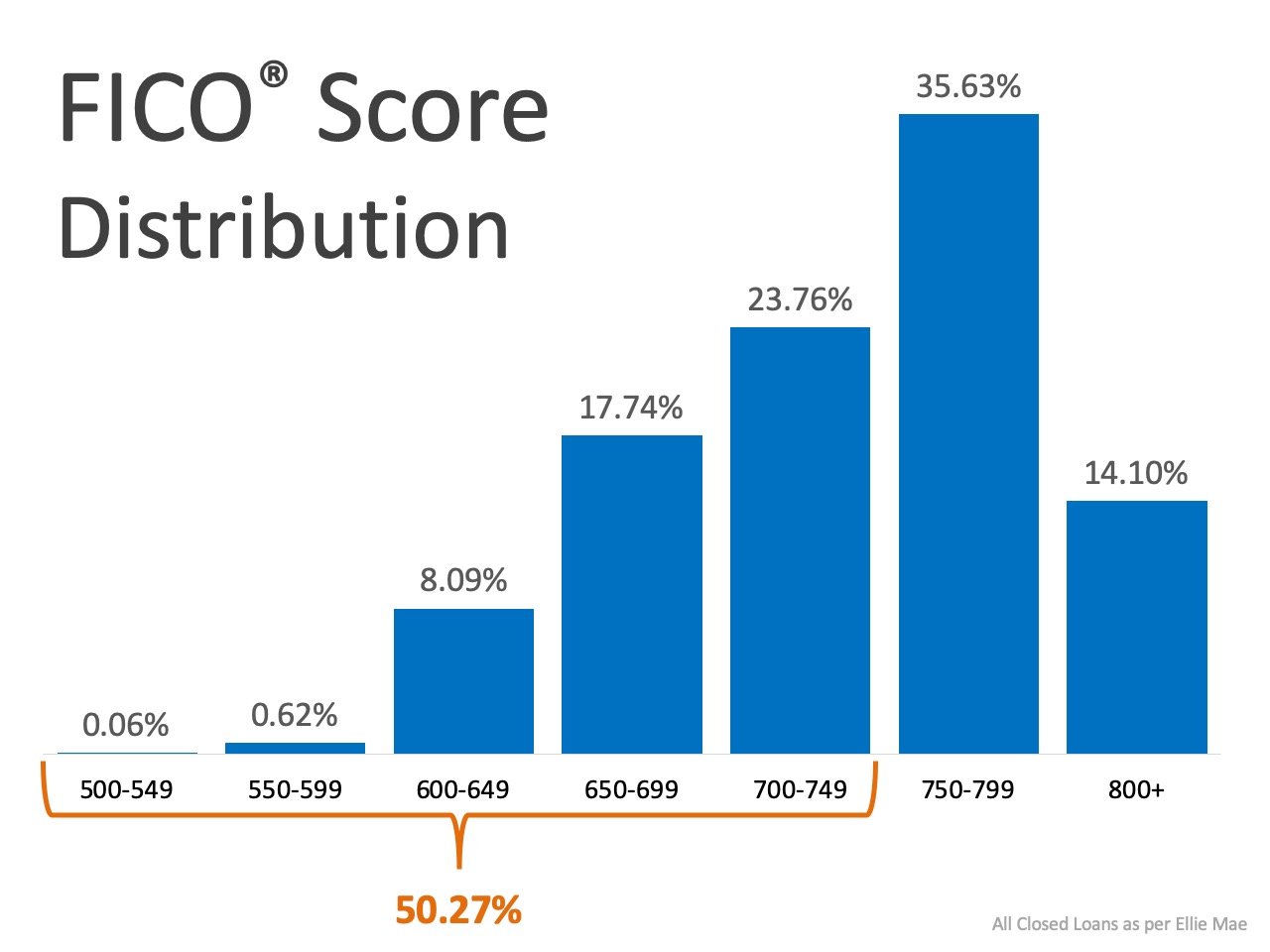
Since Americans with stronger credit are now entering the housing market, we are seeing an increase in the FICO® Score Distribution of Closed Loans (see graph below):What FICO® Score Do You Need to Qualify for a Mortgage? | MyKCMBut hang on – don’t forget that this does not mean you need a FICO® score over 700 to qualify for a mortgage. Here’s what Experian, the global leader in consumer and business credit reporting, says:
FHA Loan: “FHA loans are ideal for those who have less-than-perfect credit and may not be able to qualify for a conventional mortgage loan. The size of your required down payment for an FHA loan depends on the state of your credit score: If your credit score is between 500 and 579, you must put 10% down. If your credit score is 580 or above, you can put as little as 3.5% down (but you can put down more if you want to).”
Conventional Loan: “It’s possible to get approved for a conforming conventional loan with a credit score as low as 620, although some lenders may look for a score of 660 or better.”
USDA Loan“While the USDA doesn’t have a set credit score requirementmost lendersoffering USDA-guaranteed mortgages require a score of at least 640.”
VA Loan: “As with income levels, lenders set their own minimum credit requirements for VA loan borrowers. Lenders are likely to check credit scores as part of their screening process, and most will set a minimum score, or cutoff, that loan applicants must exceed to be considered.”

Bottom Line

As you can see, plenty of loans are granted to buyers with a FICO® score that is lower than the national average. If you’d like to understand the next steps to take when determining your credit score, let’s get together so you can learn more.

Tuesday, September 3, 2019

iBuyers: What Is the “Cost of Convenience” When Selling Your Home?

iBuyers: What Is the “Cost of Convenience” When Selling Your Home? | MyKCM
When thinking about selling their house, homeowners have many options. A relatively new option is using an “iBuyer.” What is an iBuyer?
According to Jovio, the definition is:
“A company or investor that uses Automated Valuation Models (AVMs) to make instant offers on homes. It allows sellers to close on a property quickly. Once sold, the company then turns around and resells the home for a profit.”
Today, there are many iBuyer companies such as OfferPadZillow OffersKnockOpendoor, and Perch. Even some more traditional companies offer the same or similar services (ex. Keller WilliamsRedfinRealogy). Ivy Zelman reported in her ‘Z’ Report that some traditional brokers are partnering with some of the larger iBuyers too:
“Keller Williams announced a partnership with Offerpad, aligning the largest franchise-based brokerage brand in the U.S. with the five-year-old iBuyer. The move follows Realogy’s partnership with Home Partners of America last year as an established brokerage player more directly providing an iBuyer alternative…
Likewise, in early July, Redfin and Opendoor announced a partnership, starting in Phoenix and Atlanta – aligning interests of the 13-year old, tech-enabled and value-focused brokerage with the largest and longest-standing iBuyer. Outside of these larger scale alliances, Zillow’s strategy has been to work with local brokerages as partners on a market-by-market basis.”

Does it make sense to sell your home to an iBuyer?

It depends. Collateral Analytics recently released a study which revealed the advantages and disadvantages of using an iBuyer. According to the study, if the homeowner is looking for the convenience of a quick sale with less uncertainty, using an iBuyer may make sense.
“iBuyers offer quicker closings for sellers who would like to avoid the uncertainty of knowing when and if their home will sell. For motivated sellers who want a predictable sale date and need to move, perhaps a long distance from the current location, there is no question that iBuyers have provided a welcome alternative to traditional brokerage.”
The study, however, also showed there is a cost for that convenienceCollateral Analyticsexplained:
Traditional brokers fees generally range from 5% to 7% of the sales price…In addition to this cost, buyers typically pay some closing costs including lender related charges in the range of 1% to 3%.”
In contrast:
“iBuyers charge sellers a ‘convenience fee’ of 6% to 9.5%, some also charge the seller for fees typically paid by buyers at closing adding another 1% or more. Most iBuyers will inspect the home, assess a generous home repair allowance and negotiate a (an additional) credit to handle such repairs…Overall the total direct costs, ignoring repair credits, will run 7% to 10% for an iBuyer, versus the typical 5% to 9% combined seller and buyer costs with a traditional broker. Yet, that is not the end of the story or comparison.”
The study went on to explain how iBuyers need to charge even more because they have additional expenses beyond that of the traditional broker. They include:
  1. Carrying costs involving significant amounts of capital – The iBuyer must pay the expenses of the house between the time they purchase it and the time they sell it to a new buyer.
  2. Safeguarding the home risks – A home with an iBuyer ‘For Sale Sign’ alerts anyone passing that the house is vacant. The study suggests that these homes could become targets for vagrants and criminals.
  3. Adverse selection risks – The study explains that since iBuyers use computer models to determine their offer, they may be unaware of certain challenges in the neighborhood that could adversely impact the value.
  4. Potential home price declines – As the survey states:
A downturn in home prices, not forecast by the iBuyer market analysts could be devastating as they ramp up their business platforms, particularly if the cost of capital increases. At the same time, downturns are precisely when the most sellers would want this option.”

Bottom Line

After taking a thorough look at the iBuyer platform, the study concludes that using an iBuyer is more expensive for the homeowner than the traditional brokerage model, but for some sellers, it may still make sense:
“These preliminary empirical results suggest that sellers are paying not just the difference in fees of 2% to 5% more than with traditional agencies, and a generous repair allowance, but another 3% to 5% or more to compensate the iBuyer for liquidity risks and carrying costs. In all, the typical cost to a seller appears to be in the range of 13% to 15% depending on the iBuyer vendor. For some sellers, needing to move or requiring quick extraction of equity, this is certainly worthwhile, but what percentage of the market will want this service remains to be seen.”

Wednesday, August 28, 2019

What’s the Latest on Interest Rates?

What’s the Latest on Interest Rates? | MyKCM
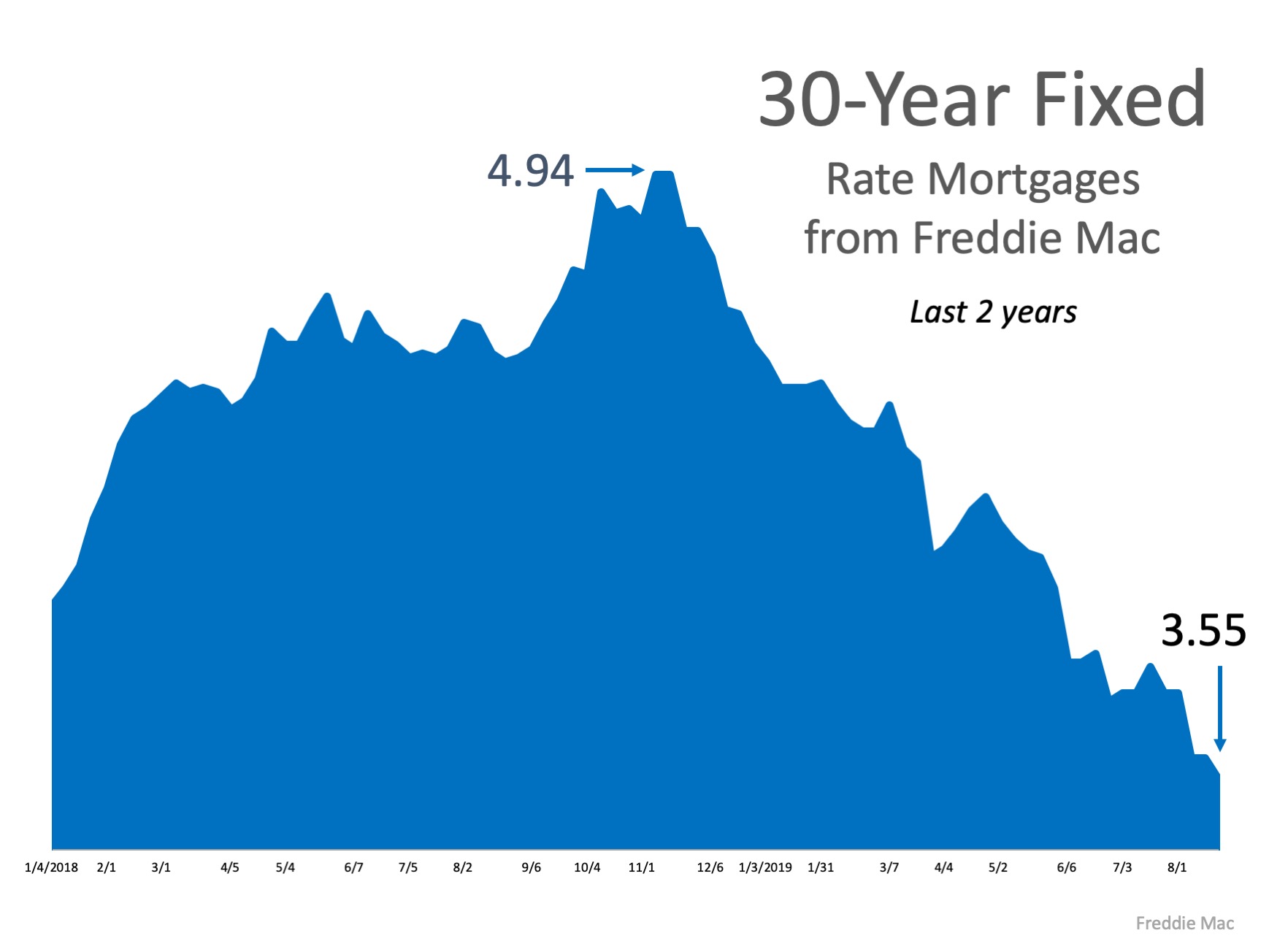
Mortgage rates have fallen by over a full percentage point since Q4 of 2018, settling at near-historic lows. This is big news for buyers looking to get more for their money in the current housing market.What’s the Latest on Interest Rates? | MyKCMAccording to Freddie Mac’s Primary Mortgage Market Survey
the 30-year fixed-rate mortgage (FRM) rate averaged 3.60 percent, the lowest it has been since November 2016.
Sam Khater, Chief Economist at Freddie Mac, notes how this is great news for homebuyers. He states,
“…consumer sentiment remains buoyed by a strong labor market and low rates that will continue to drive home sales into the fall.”
As a potential buyer, the best thing you can do is work with a trusted advisor who can help you keep a close eye on how the market is changing. Relying on current expert advice is more important than ever when it comes to making a confident and informed decision for you and your family.

Bottom Line

Even a small increase (or decrease) in interest rates can impact your monthly housing cost. If buying a home is on your short list of goals to achieve, let’s get together to determine your best move.

Tuesday, August 20, 2019

Busting the Myth About a Housing Affordability Crisis

Busting the Myth About a Housing Affordability Crisis | MyKCM
It seems you can’t find a headline with the term “housing affordability” without the word “crisis” attached to it. That’s because some only consider the fact that residential real estate prices have continued to appreciate. However, we must realize it’s not just the price of a home that matters, but the price relative to a purchaser’s buying power.
Homes, in most cases, are purchased with a mortgage. The current mortgage rate is a major component of the affordability equation. Mortgage rates have fallen by over a full percentage point since December 2018. Another major piece of the affordability equation is a buyer’s income. The median family income has risen by 3.5% over the last year.
Let’s look at three different reports issued recently that reveal how homes are very affordablein comparison to historic numbers, and how they have become even more affordable over the past several months.

1. National Association of Realtors’ (NAR) Housing Affordability Index:

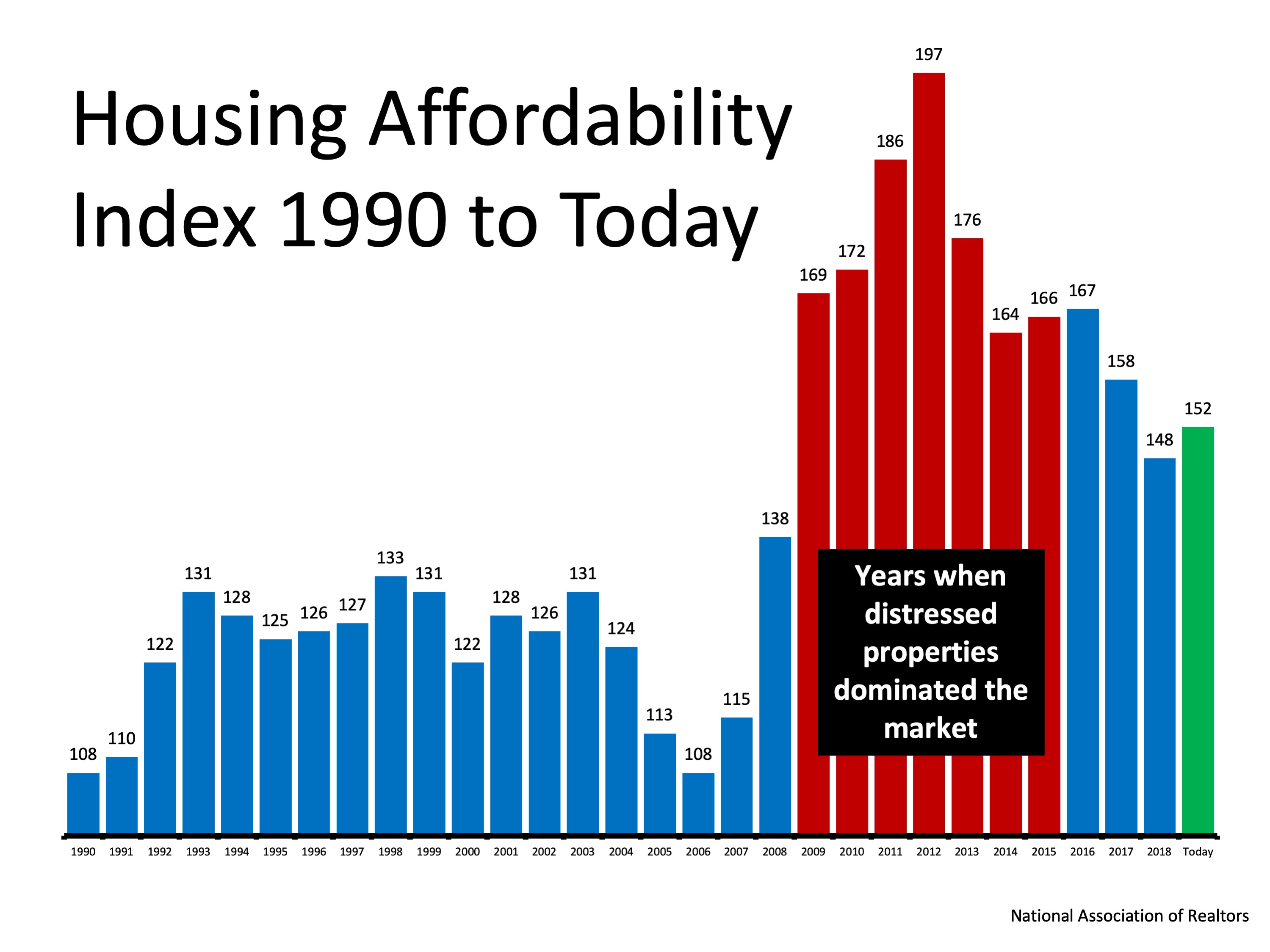
Here is a graph showing the index going all the way back to 1990. The higher the column, the more affordable homes are:Busting the Myth About a Housing Affordability Crisis | MyKCMWe can see that homes are less affordable today (the green bar) than they were during the housing crash (the red bars). This was when distressed properties like foreclosures and short sales saturated the market and sold for massive discounts. However, homes are more affordable today than at any time from 1990 to 2008.
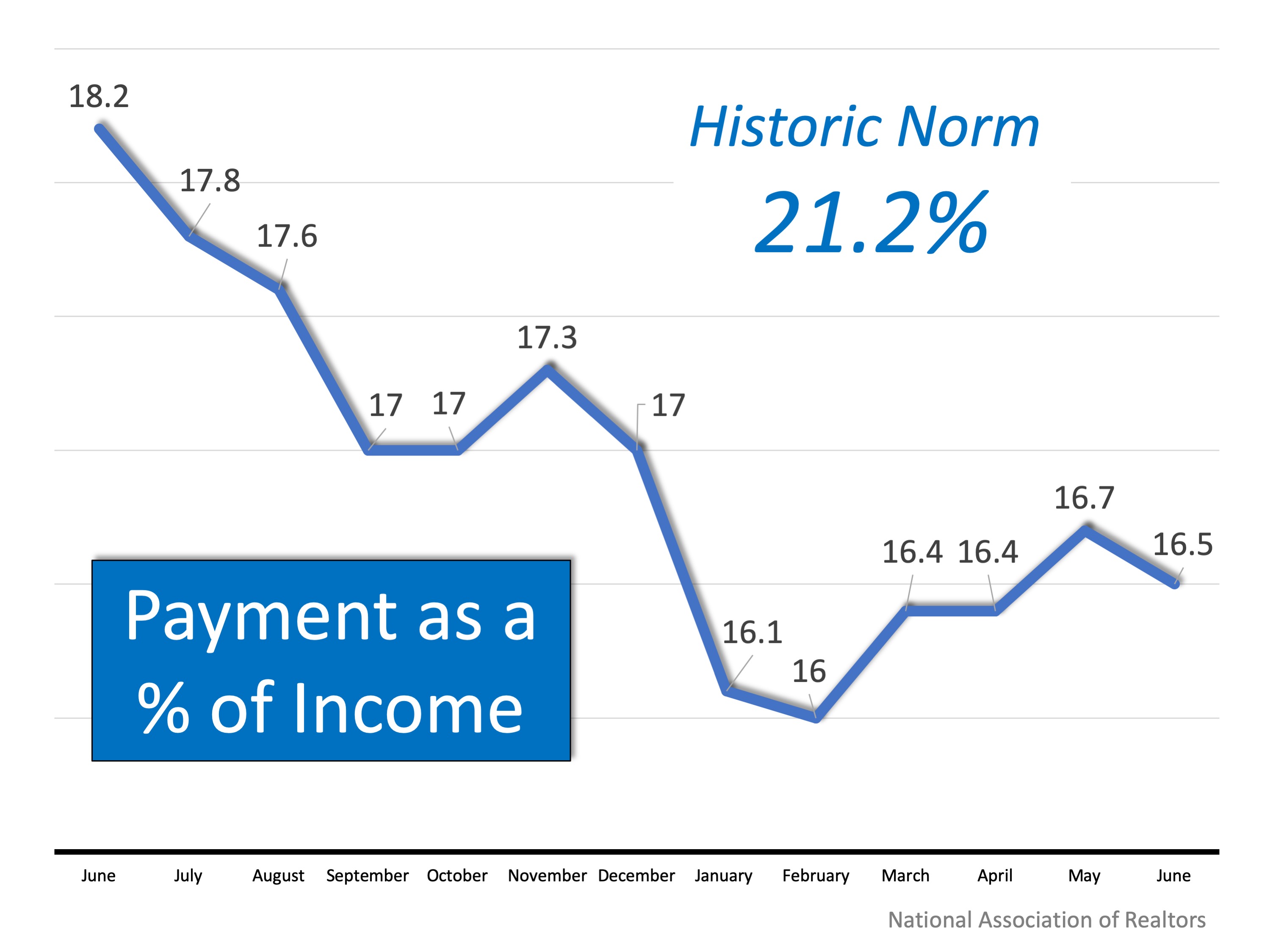
NAR’s report on the index also shows that the percentage of a family’s income needed for a mortgage payment (16.5%) is dramatically lower than last year and is well below the historic norm of 21.2%.Busting the Myth About a Housing Affordability Crisis | MyKCM

2. Black Knight’s Mortgage Monitor:

This report reveals that as a result of falling interest rates and slowing home price appreciation, affordability is the best it has been in 18 months. Black Knight Data & AnalyticsPresident Ben Graboske explains:
“For much of the past year and a half, affordability pressures have put a damper on home price appreciation. Indeed, the rate of annual home price growth has declined for 15 consecutive months. More recently, declining 30-year fixed interest rates have helped to ease some of those pressures, improving the affordability outlook considerably…And despite the average home price rising by more than $12K since November, today’s lower fixed interest rates have worked out to a $108 lower monthly payment…Lower rates have also increased the buying power for prospective homebuyers looking to purchase the average-priced home by the equivalent of 15%.”

3. First American’s Real House Price Index:

While affordability has increased recently, Mark Fleming, First American’s Chief Economistexplains:
“If the 30-year, fixed-rate mortgage declines just a fraction more, consumer house-buying power would reach its highest level in almost 20 years.”
Fleming goes on to say that the gains in affordability are about mortgage rates and the increase in family incomes:
“Average nominal household incomes are nearly 57 percent higher today than in January 2000. Record income levels combined with mortgage rates near historic lows mean consumer house-buying power is more than 150 percent greater today than it was in January 2000.”

Bottom Line

If you’ve put off the purchase of a first home or a move-up home because of affordability concerns, you should take another look at your ability to purchase in today’s market. You may be pleasantly surprised!