Monday, August 31, 2020

Three Ways to Win in a Bidding War


Three Ways to Win in a Bidding War | MyKCM

With so few houses for sale today and low mortgage rates driving buyer activity, bidding wars are becoming more common. Multiple-offer scenarios are heating up, so it’s important to get pre-approved before you start your search. This way, you can put your best foot forward – quickly and efficiently – if you’re planning to buy a home this season.

Javier Vivas, Director of Economic Research at realtor.com, explains:

“COVID-19 has accelerated earlier trends, bringing even more buyers than the market can handle. In many markets, fierce competition, bidding wars, and multiple offer scenarios may be the common theme in the weeks to come.”

Here are three things you can do to make your offer a competitive one when you’re ready to make your move.

1. Be Ready

A recent survey shows that only 52% of active homebuyers obtained a pre-approval letter before they began their home search. That means about half of active buyers missed out on this key part of the process.

Buyers who are pre-approved are definitely a step ahead when it’s time to make an offer. Having a pre-approval letter indicating you’re a qualified buyer shows sellers you’re serious. It’s often a deciding factor that can tip the scale in your direction if there’s more than one offer on a home. It’s best to contact a mortgage professional to start your pre-approval process early, so you’re in the best position right from the start of your home search.

2. Present Your Best Offer

In a highly competitive market, it’s common for sellers to pick a date and time to review all offers on a house at one time. If this is the case, you may not have an opportunity to negotiate back and forth with the sellers. As a matter of fact, the National Association of Realtors (NAR) notes:

“Not only are properties selling quickly, but they are also getting more offers. On average, REALTORS® reported nearly three offers per sold property in July 2020.”

Make sure the offer you’re presenting is the best one the sellers receive. A real estate professional can help you make sure your offer is a fair and highly competitive one.

3. Act Fast

With existing homes going like hotcakes, there’s no time to waste in the process. NAR reportshow the speed of home sales is ramping up:

“Properties typically remained on the market for 22 days in July, seasonally down from 24 days in June and from 29 days in July 2019. Sixty-eight percent of homes sold in July 2020 were on the market for less than a month.”

In addition, NAR notes:

Total existing-home salesjumped 24.7% from June to a seasonally adjusted annual rate of 5.86 million in July. The previous record monthly increase in sales was 20.7% in June of this year. Sales as a whole rose year-over-year, up 8.7% from a year ago (5.39 million in July 2019).”

As you can see, the market is gaining steam. For two consecutive months houses have sold very quickly. Essentially, you may not have time to sleep on it or shop around when you find a home you love. Chances are, someone else loves it too. If you take your time, it may not be available when you’re ready to commit.

Bottom Line

The housing market is very strong right now, and buyers are scooping up available homes faster than they’re coming to market. If you’re planning to purchase a home this year, let’s connect to discuss the trends in our current area, so you’re ready to compete – and win.

Monday, August 17, 2020

The Beginning of an Economic Recovery


The Beginning of an Economic Recovery | MyKCM

The news these days seems to have a mix of highs and lows. We may hear that an economic recovery is starting, but we’ve also seen some of the worst economic data in the history of our country. The challenge today is to understand exactly what’s going on and what it means relative to the road ahead. We’ve talked before about what experts expect in the second half of this year, and today that progress largely hinges upon the continued course of the virus.

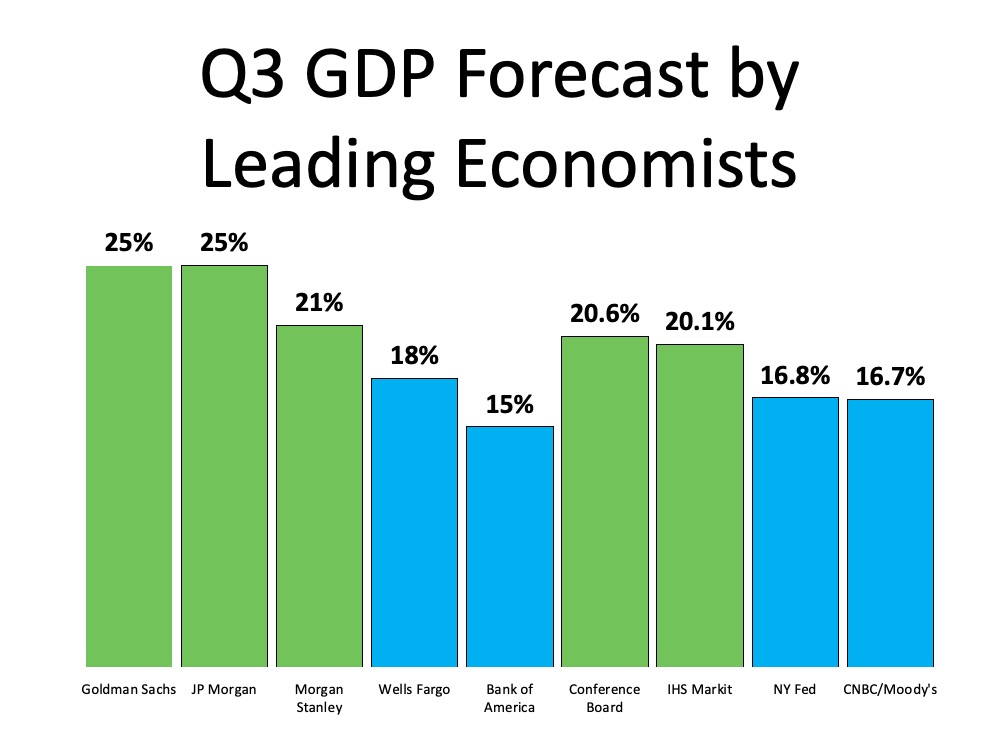
A recent Wall Street Journal survey of economists noted, “A strong economic recovery depends on effective and sustained containment of Covid-19.” Given the uncertainty around the virus, we can also see what economists are forecasting for GDP in the third quarter of this year (see graph below):The Beginning of an Economic Recovery | MyKCMOverwhelmingly, economists are projecting GDP growth in the third quarter of 2020, with 5 of the 9 experts indicating over 20% growth.

Lisa Shalett, Chief Investment Officer for Morgan Stanley puts it this way:

“Indeed, the ‘worst ever’ GDP reading could be followed by the ‘best ever’ growth in the third quarter.”

As we look forward, we can expect consumer spending to improve as well. According to Opportunity Insights, as of August 1, consumer spending was down just 7.8% as compared to January 1 of this year.

Bottom Line

An economic recovery is beginning to happen throughout the country. While there are still questions that need to be answered about the road ahead, we can expect to see improvement this quarter.

Wednesday, August 12, 2020

The Latest Unemployment Report: Slow and Steady Improvement

The Latest Unemployment Report: Slow and Steady Improvement | MyKCM

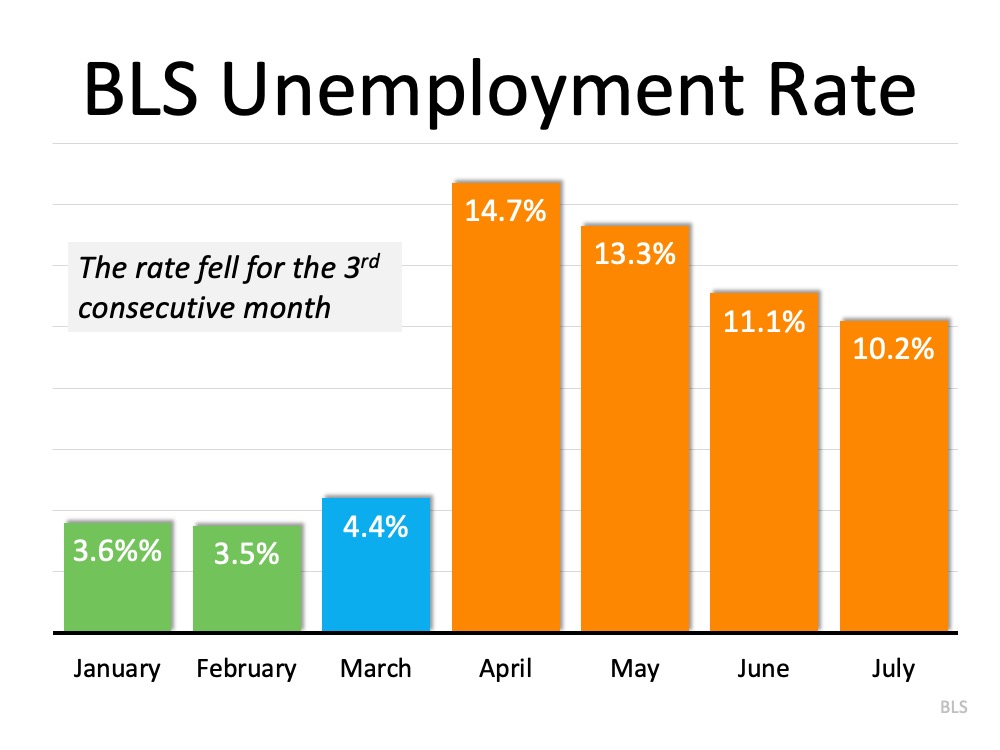
Last Friday, the Bureau of Labor Statistics (BLS) released its latest Employment Situation Summary. Going into the release, the expert consensus was for 1.58 million jobs to be added in July, and for the unemployment rate to fall to 10.5%.

When the official report came out, it revealed that 1.8 million jobs were added, and the unemployment rate fell to 10.2% (from 11.1% last month). Once again, this is excellent news as this was the third consecutive month the unemployment rate decreased.The Latest Unemployment Report: Slow and Steady Improvement | MyKCMThere is, however, still a long way to go before the job market fully recovers. The Wall Street Journal (WSJ) put a potential date on that recovery:

“July’s payroll growth, at 1.8 million, still leaves total payrolls 12.9 million lower than in February. And yet if job gains continued at July’s pace, that deficit will be erased by March 2021. If payrolls reclaim their last peak in 13 months, that would be remarkably fast. It took more than six years after the last recession.”

Permanent vs. Temporary Unemployment

During a pandemic, it’s important to differentiate those who have lost their jobs on a temporary basis from those who have lost them on a permanent basis. Morgan Stanleyeconomists noted in the same WSJ article:

“The rate of churn in the labor market remains incredibly high, but a notable positive detail in this month’s report was the downtick in the rate of new permanent layoffs.”

To address this, the core unemployment rate becomes increasingly important. It identifies the number of people who have permanently lost their jobs. This measure subtracts temporary layoffs and adds unemployed who did not search for a job recently. Jed Kolko, Chief Economist at Indeed and the founder of the index reported:

“Core unemployment fell in July for the first time in the pandemic. That’s the good news I was hoping for.”

What about the housing market?

The housing market has continued to show tremendous resilience during the pandemic. Commenting on the labor report, Robert Dietz, Chief Economist for the National Association of Home Builders (NAHB), tweeted:

“Housing continues to rebound in another positive labor market report. Home builder and remodeler job gains of 24K for July. Residential construction employment down just 56.4K compared to a year ago. Total residential construction employment at 2.85 million.”

Bottom Line

We should remain cautious in our optimism, as the recovery is ultimately tied to our future success in mitigating the ongoing health crisis. However, as Mike Fratantoni, Chief Economistfor the Mortgage Bankers Association, reminds us“The pace of job growth slowed in July, but the gains over the past three months represent an impressive rebound during the ongoing economic challenges brought forth by the pandemic.”

Monday, August 3, 2020

Where Is the Housing Market Headed for the Rest of 2020? [INFOGRAPHIC]

Where Is the Housing Market Headed in 2020? [INFOGRAPHIC] | MyKCM

Some Highlights:

  • The housing market is forecasted to finish the year with growing strength.
  • Historically low mortgage rates are creating great potential for homebuyers, and home sales are on the rise.
  • If you’re thinking of buying or selling a home this year, let’s connect to maximize your opportunity today.

Monday, July 27, 2020

Home Sales Hit a Record-Setting Rebound

Home Sales Hit a Record-Setting Rebound | MyKCM
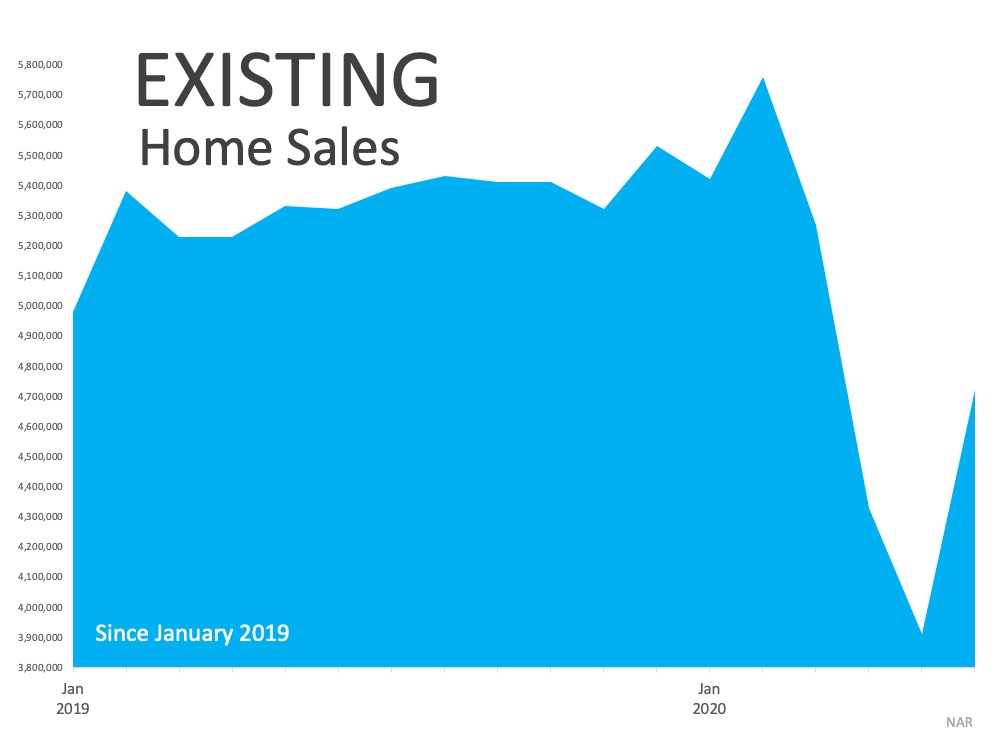
With a worldwide health crisis that drove a pause in the economy this year, the housing market was greatly impacted. Many have been eagerly awaiting some bright signs of a recovery. Based on the latest Existing Home Sales Report from the National Association of Realtors (NAR), June hit a much-anticipated record-setting rebound to ignite that spark.
According to NARhome sales jumped 20.7% from May to a seasonally-adjusted annual rate of 4.72 million in June: 
“Existing-home sales rebounded at a record pace in June, showing strong signs of a market turnaround after three straight months of sales declines caused by the ongoing pandemic…Each of the four major regions achieved month-over-month growth.”
Home Sales Hit a Record-Setting Rebound | MyKCMThis significant rebound is a major boost for the housing market and the U.S. economy. According to Lawrence Yun, Chief Economist for NAR, the momentum has the potential to continue on, too:
“The sales recovery is strong, as buyers were eager to purchase homes and properties that they had been eyeing during the shutdown…This revitalization looks to be sustainable for many months ahead as long as mortgage rates remain low and job gains continue.”
With mortgage rates hitting an all-time low, dropping below 3% for the first time last week, potential homebuyers are poised to continue taking advantage of this historic opportunity to buy. This fierce competition among buyers is contributing to home price increases as well, as more buyers are finding themselves in bidding wars in this environment. The report also notes:
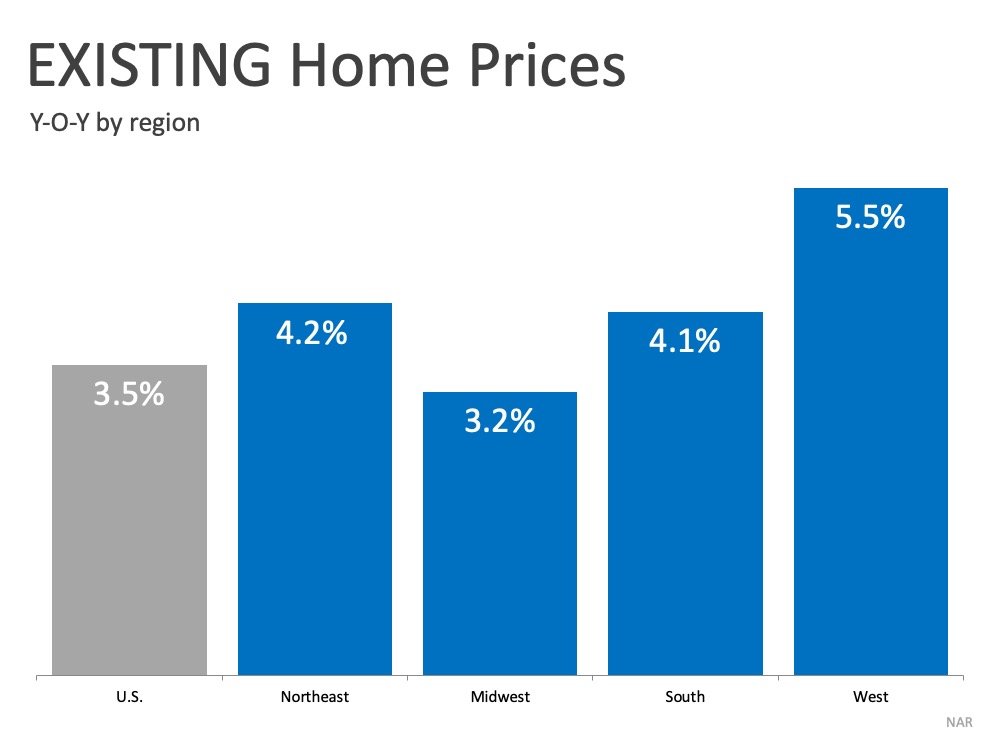
“The median existing-home price for all housing types in June was $295,300, up 3.5% from June 2019 ($285,400), as prices rose in every region. June’s national price increase marks 100 straight months of year-over-year gains.”
The graph below shows home price increases by region, powered by low interest rates, pent-up demand, and a decline in inventory on the market:Home Sales Hit a Record-Setting Rebound | MyKCMYun also indicates:
“Home prices rose during the lockdown and could rise even further due to heavy buyer competition and a significant shortage of supply.”

Bottom Line

Buyers returning to the market is a great sign for the economy, as housing is still leading the way toward a recovery. If you’re ready to buy a home this year, let’s connect to make sure you have the best possible guide with you each step of the way.

Monday, July 13, 2020

Buyers: Are You Ready for a Bidding War?

Buyers: Are You Ready for a Bidding War? | MyKCM
With businesses reopening throughout the country and some experts indicating early signs of a much-anticipated economic recovery, more homebuyers are actively entering the housing market this summer. Today, housing is truly driving the U.S. economy forward. With so many buyers looking for homes to purchase and so few houses for sale right now, there’s a disconnect between supply and demand. This imbalance is pushing home prices upward while driving more bidding wars and multiple-offer scenarios. Danielle Hale, Chief Economistat realtor.com explains:
“People are surprised that prices are rising, not falling, because in the last recession home prices fell, the difference this time is the severe shortage of homes for sale…We are seeing bigger price increases with [a limited] number of homes…That is likely to lead to more competition and potentially multiple offers and bidding wars.”
According to the recent Realtors Confidence Index (RCI) survey conducted by the National Association of Realtors (NAR), this trend is growing:
“On average, there were about three offers on a home that closed in May, up from just about two in April 2020 and in May 2019 (2.3 offers).”
HousingWire also indicates:
“42% of homeowners who made a purchase during the January to May time period ended up in a bidding war, demonstrating the strong demand for homes amid low inventory.”
With more people returning to work we’ll continue to see the number of interested buyers increase. So, if you’re among the many people looking for a home to buy this summer, it’s important to ensure you have the right guidance from the start. This way, you make sure your offer stands out from the crowd when it really counts. Here are two tips to follow.

1. Hire a Trusted Local Expert

A trusted local real estate professional matters more than ever right now, as noted in a recent survey shared by NAR. In fact, according to respondents, 54% of buyers and 62% of sellers indicated that “Particularly during the pandemic, a real estate agent’s guidance is especially valued.”
We’re not in a normal market. We are in one of the greatest health crises our nation has ever seen. The pandemic has had a dramatic impact on the journey consumers must take to purchase a home. To successfully navigate the landscape today, you need a true expert on your side.

2. Get Pre-Approved for a Mortgage

When there are more buyers than sellers on the market, the process to find a home becomes much more challenging. One way to show you’re serious about buying a home is to work with a lender to get pre-approved for a mortgage before starting your search. With a pre-approval letter, sellers will see your true desire to buy this year, potentially helping your offer rise to the top.

Bottom Line

If this is the year you’re ready to buy, let’s connect to get the process started so you can make sure your offer is a strong one when the competition heats up.

Monday, July 6, 2020

A Historic Rebound for the Housing Market

A Historic Rebound for the Housing Market | MyKCM
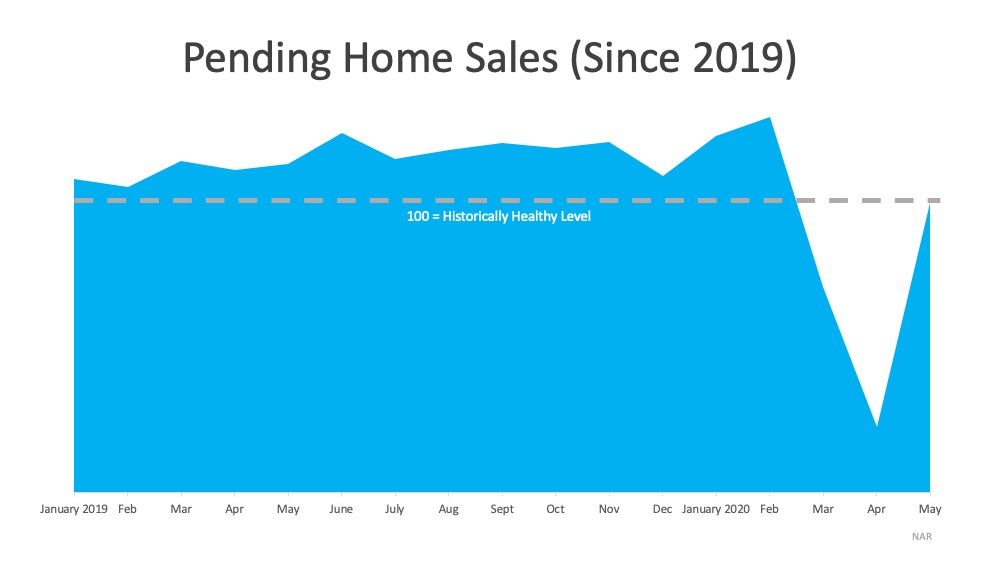
Pending Home Sales increased by 44.3% in May, registering the highest month-over-month gain in the index since the National Association of Realtors (NAR) started tracking this metric in January 2001. So, what exactly are pending home sales, and why is this rebound so important?
According to NAR, the Pending Home Sales Index (PHS) is:
“A leading indicator of housing activity, measures housing contract activity, and is based on signed real estate contracts for existing single-family homes, condos, and co-ops. Because a home goes under contract a month or two before it is sold, the Pending Home Sales Index generally leads Existing-Home Sales by a month or two.”
In real estate, pending home sales is a key indicator in determining the strength of the housing market. As mentioned before, it measures how many existing homes went into contract in a specific month. When a buyer goes through the steps to purchase a home, the final one is the closing. On average, that happens about two months after the contract is signed, depending on how fast or slow the process takes in each state.

Why is this rebound important? 

With the COVID-19 pandemic and a shutdown of the economy, we saw a steep two-month decline in the number of houses that went into contract. In May, however, that number increased dramatically (See graph below):A Historic Rebound for the Housing Market | MyKCMThis jump means buyers are back in the market and purchasing homes right now. Lawrence Yun, Chief Economist at NAR mentioned:
“This has been a spectacular recovery for contract signings and goes to show the resiliency of American consumers and their evergreen desire for homeownership…This bounce back also speaks to how the housing sector could lead the way for a broader economic recovery.”
But in order to continue with this trend, we need more houses for sale on the market. Yun continues to say:
“More listings are continuously appearing as the economy reopens, helping with inventory choices…Still, more home construction is needed to counter the persistent underproduction of homes over the past decade.”
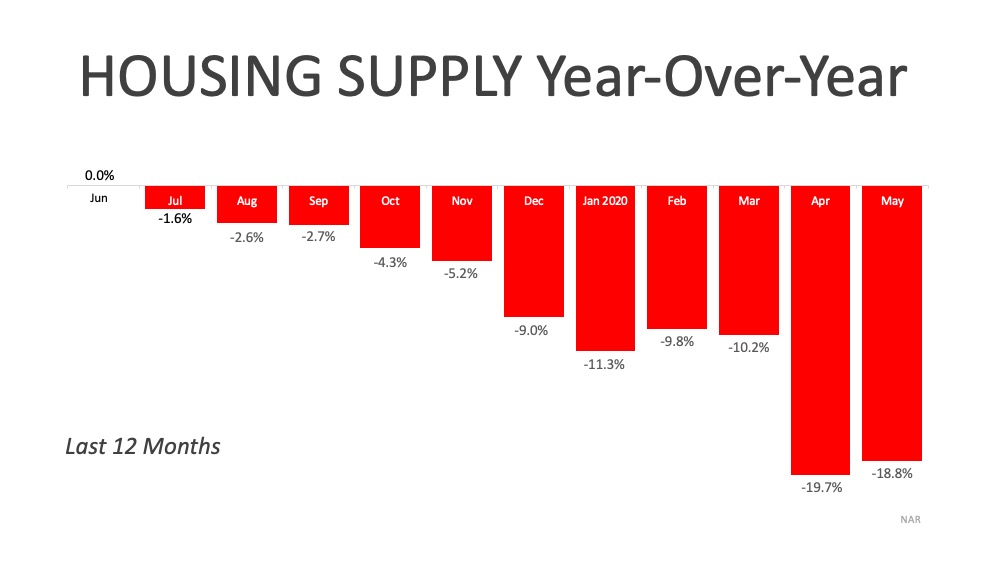
As we move through the year, we’ll see an increase in the number of houses being built. This will help combat a small portion of the inventory deficit. The lack of overall inventory, however, is still a challenge, and it is creating an opportunity for homeowners who are ready to sell. As the graph below shows, during the last 12 months, the supply of homes for sale has been decreasing year-over-year and is not keeping up with the demand from homebuyers.A Historic Rebound for the Housing Market | MyKCM

Bottom Line

If you decided not to sell this spring due to the health crisis, maybe it’s time to jump back into the market while buyers are actively looking for homes. Let’s connect today to determine your best move forward.