Monday, March 21, 2022

Spring Cleaning Checklist for Sellers [INFOGRAPHIC]

 Spring Cleaning Checklist for Sellers [INFOGRAPHIC] | MyKCM

Some Highlights

  • If you’re thinking about selling your house this spring, here are some things you’ll want to tackle before you list.
  • Spend your time on tasks that make it feel inviting, show it’s cared for, and boost your curb appeal.
  • To determine the full list of things you’ll want to tackle for your home, you need the opinion of a trusted expert. Let’s connect to help make sure your house shows well this season.

Monday, March 7, 2022

Why It’s Critical To Price Your House Right

 Why It’s Critical To Price Your House Right | MyKCM

When you make a move, you want to sell your house for the highest price possible. That might be why many homeowners are eager to list in today’s sellers’ market. After all, with record-low inventory and high buyer demand, many homes are selling for more than asking price. Data from the National Association of Realtors (NAR) shows 46% of homes are selling above list price today.

But even in a market like we have now, working with an agent to set the right asking price is critical, as pricing it too high or too low could have a negative impact on your final sale. Here’s why.

Pricing Your House Right Is Crucial Even in a Sellers’ Market

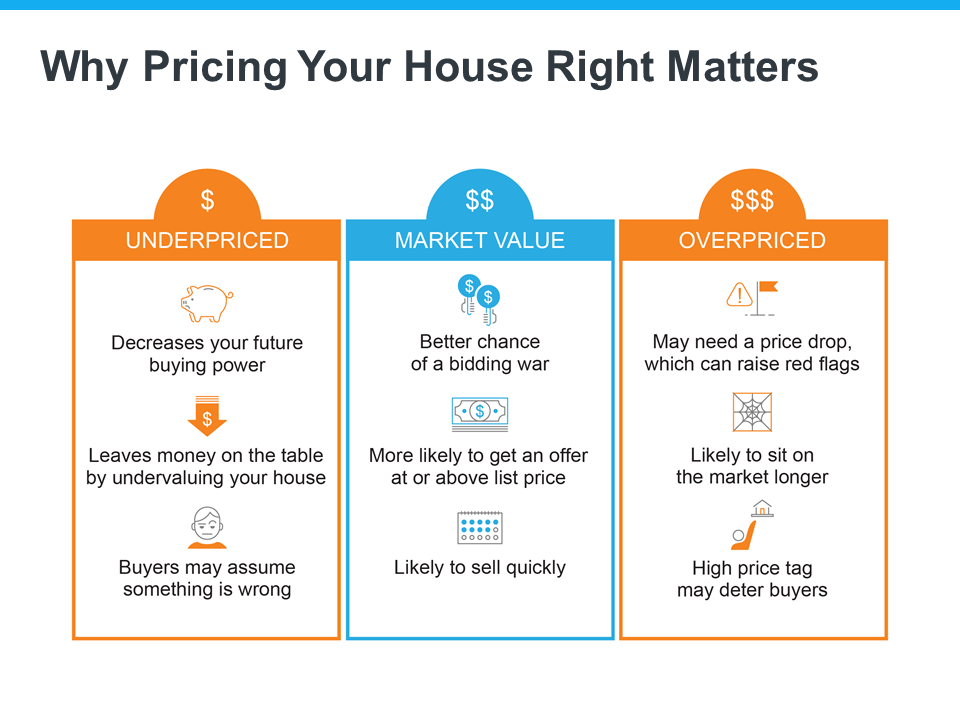
The price you set for your house sends a message to potential buyers. Price it too low and you might raise questions about your home’s condition or lead buyers to assume something is wrong with the property. Not to mention, you could leave money on the table, which decreases your future buying power if you undervalue your house.

On the other hand, price it too high and you run the risk of deterring buyers. When that happens, you may have to do a price drop to try to re-ignite interest in your house when it sits on the market for a while. But be aware that a price drop can be seen as a red flag for some buyers who will wonder why the price was reduced and what that means about the home.

In other words, think of pricing your home as a target. Your goal is to aim directly for the center – not too high, not too low, but right at market value. Pricing your house fairly based on market conditions increases the chance you’ll have more buyers who are interested in purchasing it. That makes it more likely you’ll see a bidding war, too. And when a bidding war happens, you’ll likely get an even higher final sale price. Plus, when homes are priced right, they tend to sell quickly.

To get a look into the potential downsides of over or underpricing your house and the perks that come with pricing it at market value, see the chart below:

Why It’s Critical To Price Your House Right | MyKCM

Lean on a Professional’s Expertise To Price Your House Right

There are several factors that go into pricing your house and balancing them is the key. That’s why it’s important to lean on an expert real estate advisor when you’re ready to move. A local real estate advisor is knowledgeable about:

  • The value of homes in your neighborhood
  • The current demand for houses in today’s market
  • The condition of your house and how it affects the value

A real estate professional will balance these factors to make sure the price of your house makes the best first impression and gives you the greatest return on your investment in the end.

Bottom Line

Even in a sellers’ market, pricing your house right is critical. Don’t rely on guesswork. Let’s connect to make sure your house is perfectly priced.

Monday, February 28, 2022

The Difference Between Renting and Owning [INFOGRAPHIC]

The Difference Between Renting and Owning [INFOGRAPHIC] | MyKCM

Some Highlights

  • If you’re deciding whether to rent or buy, consider the many financial benefits that come with owning a home.
  • As a renter, you build your landlord’s wealth and face rising costs. As a homeowner, you build your own net worth and can lock in your monthly payments for the length of your loan.
  • If you’re weighing your options, remember that owning a home is a decision that has considerable financial perks. If you want to learn more, let’s connect to talk about the perks of homeownership.

Monday, February 21, 2022

Real Estate Voted the Best Investment Eight Years in a Row

 Real Estate Voted the Best Investment Eight Years in a Row | MyKCM

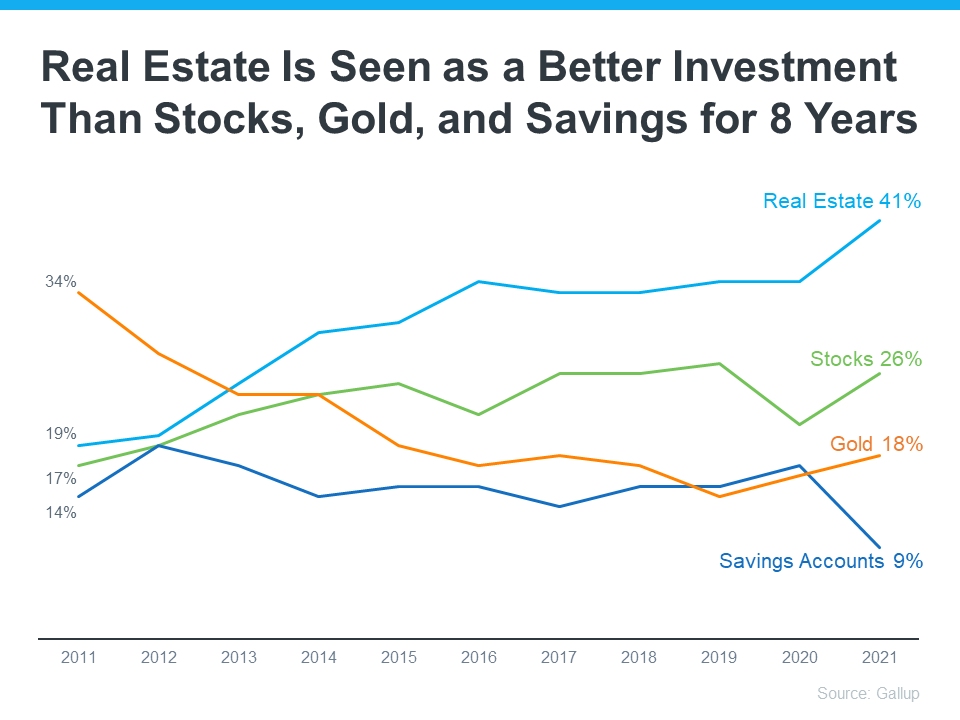
In an annual Gallup poll, Americans chose real estate as the best long-term investment. And it’s not the first time it’s topped the list, either. Real estate has been on a winning streak for the past eight years, consistently gaining traction as the best long-term investment (see graph below):

Real Estate Voted the Best Investment Eight Years in a Row | MyKCMIf you’re thinking about purchasing a home this year, this poll should reassure you. Even when inflation is rising like it is today, Americans agree an investment like real estate truly shines.

Why Is Real Estate a Great Investment During Times of High Inflation?

With inflation reaching its highest level in 40 years, it’s more important than ever to understand the financial benefits of homeownership. Rising inflation means prices are increasing across the board. That includes goods, services, housing costs, and more. But when you purchase your home, you lock in your monthly housing payments, effectively shielding yourself from increasing housing payments. James Royal, Senior Wealth Management Reporter at Bankrateexplains it like this:

A fixed-rate mortgage allows you to maintain the biggest portion of housing expenses at the same payment. Sure, property taxes will rise and other expenses may creep up, but your monthly housing payment remains the same.” 

If you’re a renter, you don’t have that same benefit, and you aren’t protected from increases in your housing costs, especially rising rents.

History Shows During Inflationary Periods, Home Prices Rise as Well

As a homeowner, your house is an asset that typically increases in value over time, even during inflation. That‘s because, as prices rise, the value of your home does, too. And that makes buying a home a great hedge during periods of high inflation. Natalie Campisi, Advisor Staff for Forbesnotes:

Tangible assets like real estate get more valuable over time, which makes buying a home a good way to spend your money during inflationary times.

Bottom Line

Housing truly is a strong investment, especially when inflation is high. When you lock in a mortgage payment, you’re shielded from housing cost increases, and you own an asset that typically gains value with time. If you want to better understand how buying a home could be a great investment for you, let’s connect today.

Monday, January 24, 2022

Americans Choose Real Estate as the Best Investment [INFOGRAPHIC]

 Americans Choose Real Estate as the Best Investment [INFOGRAPHIC] | MyKCM

Some Highlights

  • According to a Gallup poll, real estate has been rated the best long-term investment for eight years in a row.
  • Real estate tops the list because you’re not just buying a place to call home – you’re investing in your future. Real estate is typically considered a stable and secure asset that can grow in value over time.
  • Let’s connect today if you’re ready to make real estate your best investment this year.

Monday, January 3, 2022

Why Selling Your House with a Real Estate Professional Is Essential

 Why Selling Your House with a Real Estate Professional Is Essential | MyKCM

Selling your house is no simple task. And when you sell on your own – known as a FSBO (or For Sale by Owner) – you’re responsible for handling some of the more difficult aspects of the process without the expert guidance you need.

The 2021 Profile of Home Buyers and Sellers from the National Association of Realtors (NAR) surveys homeowners who recently sold their house on their own and asks what difficulties they faced. Those sellers say some of the biggest headaches are prepping their house for sale, pricing it right, and handling the required paperwork.

Working with an agent is the best way to ensure you have an expert on your side to guide you at every turn. Agents have the skills and knowledge that are essential to navigating each step with ease, efficiency, and accuracy. Here are just a few things a real estate agent will do to make sure you get the most out of your sale.

1. Make the Best First Impression

Selling your house requires a significant amount of time and effort. Doing it right takes expertise and an understanding of today’s buyers. Your agent knows the answers to common questions, such as:

  • Do I need to take down my personal art?
  • How much landscaping does my house need?
  • What colors should I paint my walls?

Your time and money are important, and you don’t want to waste either one focusing on the wrong things. A real estate advisor relies on their experience to answer these questions and more, allowing you to make the right investments to prep your house before you list.

2. Maximize Your Buyer Pool – and Your Sale

Today, the average home is getting 3.6 offers per sale according to recent data from NAR. That’s great news if you’re planning to sell, since the more offers you receive, the more likely you are to sell your house in a bidding war, and for a higher price.

Real estate agents have an assortment of tools at their disposal, like social media followers and agency resources, that will ensure your house is viewed by the most buyers. Without access to these tools and your agent’s marketing expertise, your buyer pool – and your home’s selling potential – is limited.

3. Understand the Documentation, Including the Fine Print

Today, when a house is sold, more disclosures and regulations are mandatory, meaning the number of legal documents to juggle is growing. It’s hard to understand all the requirements and fine print (especially if you’re not an expert). That’s why your advisor is an invaluable guide.

Your agent knows exactly what needs to happen, what all the paperwork means, and can work through it efficiently. They’ll help you review the documentation and avoid any costly missteps that could happen if you tackle it on your own.

4. Act as Your Expert Negotiator

If you sell without an agent, you’ll also be solely responsible for all negotiations. That means you have to coordinate with:

  • The buyer, who wants the best deal possible
  • The buyer’s agent, who will use their expertise to advocate for the buyer
  • The inspection company, which works for the buyer and will almost always find concerns with the house
  • The appraiser, who assesses the property’s value to protect the lender

Instead of going toe-to-toe with all these parties alone, lean on an expert. Your agent relies on experience and training to make the right moves throughout the negotiation. They’ll know what levers to pull, how to address each individual concern, and when you may want to get a second opinion. When you sell your house yourself, you’ll need to be prepared to have these conversations on your own.

5. Price It Right

Real estate professionals have the expertise to price your house accurately and competitively. To do so, they compare your house to recently sold homes in your area and factor in the current condition of your house. These factors are key to making sure your house is priced to move quickly and get you the maximum return on your investment.

When you sell as a FSBO, you’re operating without this advantage. That could cost you in the long run if you price your house too high or too low.

Bottom Line

There’s a lot that goes into selling your house, and it takes time, effort, and expertise to truly maximize your sale. Instead of tackling it alone, let’s connect to make sure you have an expert on your side.

Monday, December 27, 2021

The Average Homeowner Gained $56,700 in Equity over the Past Year

 The Average Homeowner Gained over $56,700 in Equity over the Past Year | MyKCM

When you think of homeownership, what’s the first thing that comes to mind? Chances are you might focus on the non-financial benefits, like the security or stability a home provides. But what about equity? While it can be overlooked, a homeowner’s equity helps build long-term wealth over time. Here’s a look at what equity is and why it matters.

For a homeowner, your equity is the current value of your home minus what you owe on the loan. So, as home values climb, your equity does too. That’s exactly what’s happening today. There aren’t enough homes on the market to meet buyer demand, so bidding wars and multiple offers are driving prices up. That’s because people are willing to pay more to buy a home. Right now, this low supply and high demand are giving current homeowners a significant equity boost.

Dr. Frank Nothaft, Chief Economist at CoreLogic, explains it like this:

Home price growth is the principal driver of home equity creation. The CoreLogic Home Price Index reported home prices were up 17.7% for the past 12 months ending September, spurring the record gains in home equity wealth.

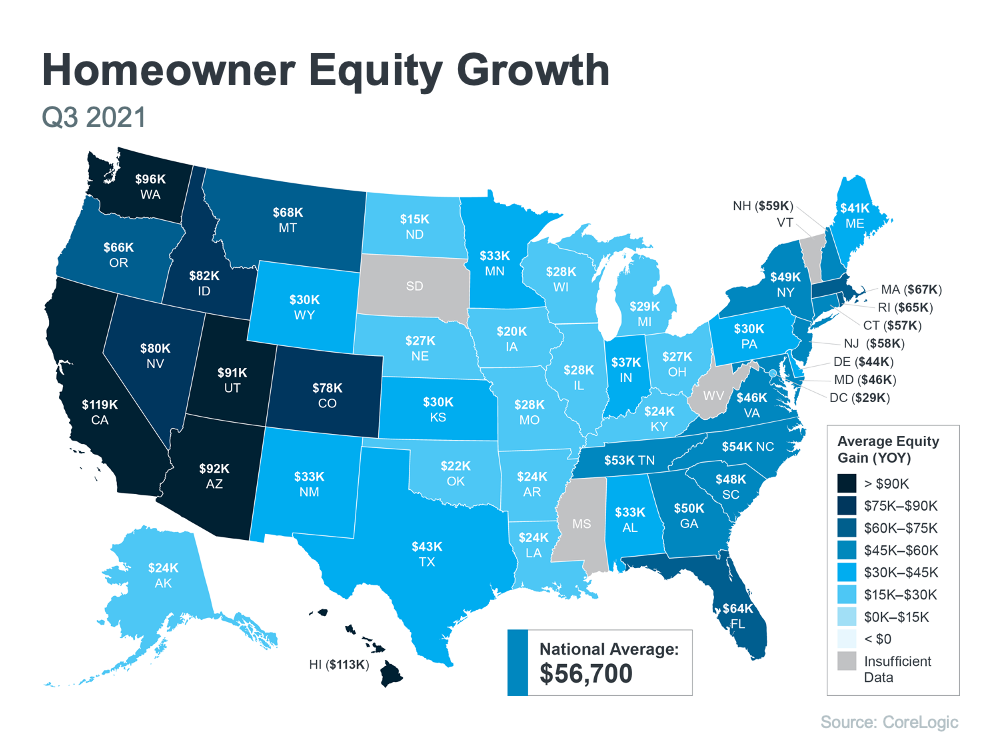
To find out just how much rising home values have impacted equity, we turn to the latest Homeowner Equity Insights from CoreLogic. According to that report, the average homeowner’s equity has grown by $56,700 over the last 12 months.

Curious how your state stacks up? Check out the map below to find out the average equity gain for your area.The Average Homeowner Gained over $56,700 in Equity over the Past Year | MyKCM

How Rising Equity Impacts You

If you’re already a homeowner, equity not only builds your wealth, it also opens doors for you to achieve your goals. It works like this: when you sell your house, the equity you built up comes back to you in the sale. You can use those proceeds to fuel your next move, especially if you’ve decided your needs have changed and you’re looking for something new.

If you’re thinking about becoming a homeowner, understanding the importance of equity can help you realize why homeownership is a worthwhile goal. It builds your wealth and gives you peace of mind that your investment is a wise one, not just from a lifestyle perspective, but from a financial one too.

Bottom Line

Whether you’re a current homeowner or you’re ready to become one, it’s important to know how equity works and why it matters. If this inspires you to make a move, let’s connect to explore your options and find out what steps you need to take next.